

E-Consignment Note — What It Is and How to Prepare for It


An electronic Consignment Note (e-Consignment Note) is a digital equivalent of the traditional Consignment Note. It replaces the paper form and enables automated document flow, cargo control, and seamless interaction between the carrier, sender, and recipient. Previously, we explained what a standard Consignment Note is; now, let’s explore the specifics and features of its electronic format.
Key Differences Between the e-Consignment Note and the Paper Form
An electronic Consignment Note is not just a scanned version of a paper document. It is a digital record stored in a dedicated system and has the same legal force as a handwritten document.
The main difference between the formats is how they are created and circulated. While a paper document is carried physically by the driver, an e-Consignment Note exists only digitally and is immediately entered into the Unified Register.
Key features of the e-Consignment Note:
• creation and signing exclusively online;
• automatic verification and identification of participants;
• transparent route monitoring;
• automatic synchronization with the Unified Consignment Note Register;
• elimination of risks related to document loss or damage;
• instant access to data for audit and accounting.
According to experts, digitalization reduces document processing time by up to 40%.
Comparison Table
| Criteria | Paper Consignment Note | Electronic Consignment Note |
| Form | Physical paper | Digital record |
| Speed | Slow courier delivery | Instant online transmission |
| Security | Risk of loss or forgery | Protected by e-signature and encryption |
| Registration | Manually archived | Automatically registered in the central database |
| Control | Limited, stage-based | Real-time online monitoring |
Who Must Use the e-Consignment Note
According to Ukrainian legislation, e-Consignment Notes are mandatory for:
• freight carriers;
• senders and recipients of material goods;
• companies operating in FMCG, retail, industry, and pharmaceuticals.
These requirements apply to legal entities and private entrepreneurs engaged in commercial freight transportation.
How the e-Consignment Note System Works
The workflow consists of several stages:
- Authorization — the sender logs into the system through the selected platform.
- Filling out — a new e-Consignment Note is created with details about the cargo, sender, recipient, and route.
- Validation — the system checks whether the fields are completed correctly.
- Signing — the document is signed using a digital signature.
- Registration — the Consignment Note is submitted to the Unified Register and assigned a unique number.
After registration, cargo movement can be monitored through the electronic cabinet until delivery.
What Information the E-Consignment Note Contains
The electronic Consignment Note includes details about:
• the sender and recipient;
• the cargo (name, volume, weight, number of places);
• the vehicle;
• loading and unloading points;
• delivery and acceptance conditions;
• route;
• accompanying documents.
Electronic Signature and Legal Force
The e-Consignment Note becomes legally binding after signing. A Qualified Electronic Signature (QES) of both the sender and the carrier is required. It guarantees that the document was not modified after signing. Verification in the system is instant and transparent.
Platforms and Services for Processing e-Consignment Notes
Several accredited platforms operate in Ukraine, including:
• Vchasno
• COTA
• EDIN
• M.E.Doc
The choice depends on the needs of the business, such as scale, budget, and the need for integration with accounting systems like 1C.
Ekol logistics experts advise: “When choosing a service, consider not only the price but also functionality, support quality, and integration options. This will save time and money later.”
Steps for Transitioning a Business to the e-Consignment Note
To ensure a smooth and efficient transition, specialists recommend following this sequence:
- Analyze the current document flow and logistics operations of the business.
- Compare available platforms and choose the most suitable e-Consignment Note solution.
- Obtain a QES certificate for the manager and authorized personnel.
- Set up the system and integrate it with your accounting software if needed.
- Train staff on how to use the new system.
- Perform a test run to identify errors.
- Fully switch to working with e-Consignment Notes.

Common Mistakes When Implementing e-Consignment Notes
Despite a basic understanding of how the e-Consignment Note system works, businesses often make mistakes during the early stages, causing operational and financial risks. The most common mistakes include:
• incorrect data entry;
• absence of a QES;
• inaccurate cargo description;
• skipping control points along the route;
• duplicated documents;
• underestimating the need for backup internet, resulting in failure to issue documents on time.
Ekol clients can avoid these problems because the company provides comprehensive logistics support, which includes both transportation and documentation, including the preparation of electronic Consignment Notes. As a leading logistics provider, Ekol actively uses modern tools to ensure a smooth transition to digital workflows.
Benefits of Implementing the e-Consignment Note for Businesses
“Switching to electronic documents is not about trends, but about efficiency and full operational control,” emphasize Ekol specialists.
Key advantages include:
• time and cost savings due to no printing, delivery, or physical archiving;
• full transparency across all cargo control stages;
• minimized human-factor errors thanks to system validation;
• faster delivery cycles enabled by rapid electronic document processing.
Digitalization of logistics is inevitable, but with an experienced logistics partner, the transition becomes significantly easier.
FAQ
What is an e-Consignment Note, and how does it differ from a paper one?
It is a digital document created, signed, and stored electronically.
Who is required to use e-Consignment Notes?
Entrepreneurs and companies are involved in regular cargo transportation.
What information must be added to the electronic Consignment Note?
Cargo details, shipment participants, route, vehicle information, and a digital signature.
Is a QES required for issuing an e-Consignment Note?
Yes, the Qualified Electronic Signature ensures legal validity.
How to choose a platform for working with e-Consignment Notes?
Focus on functionality, integration with your ERP system, and quality of technical support.
read more
Similar articles
For a business, a logistics company is one reliable partner instead of a dozen separate contractors. It handles communication with carriers and quickly resolves force-majeure situations on the road

Without reliable delivery, a farmer’s harvest won’t reach the market on time. A logistics company for a farmer is not just a service provider — it’s a partner on whom the financial outcome of the season depends.

On the night of July 19, 2026, a massive missile attack severely damaged the Ekol Logistics distribution center located in the AMTEL logistics complex.
The changes for Ukrainian exporters in 2026 concern not only export clearance procedures but also the organization of shipments to EU countries.
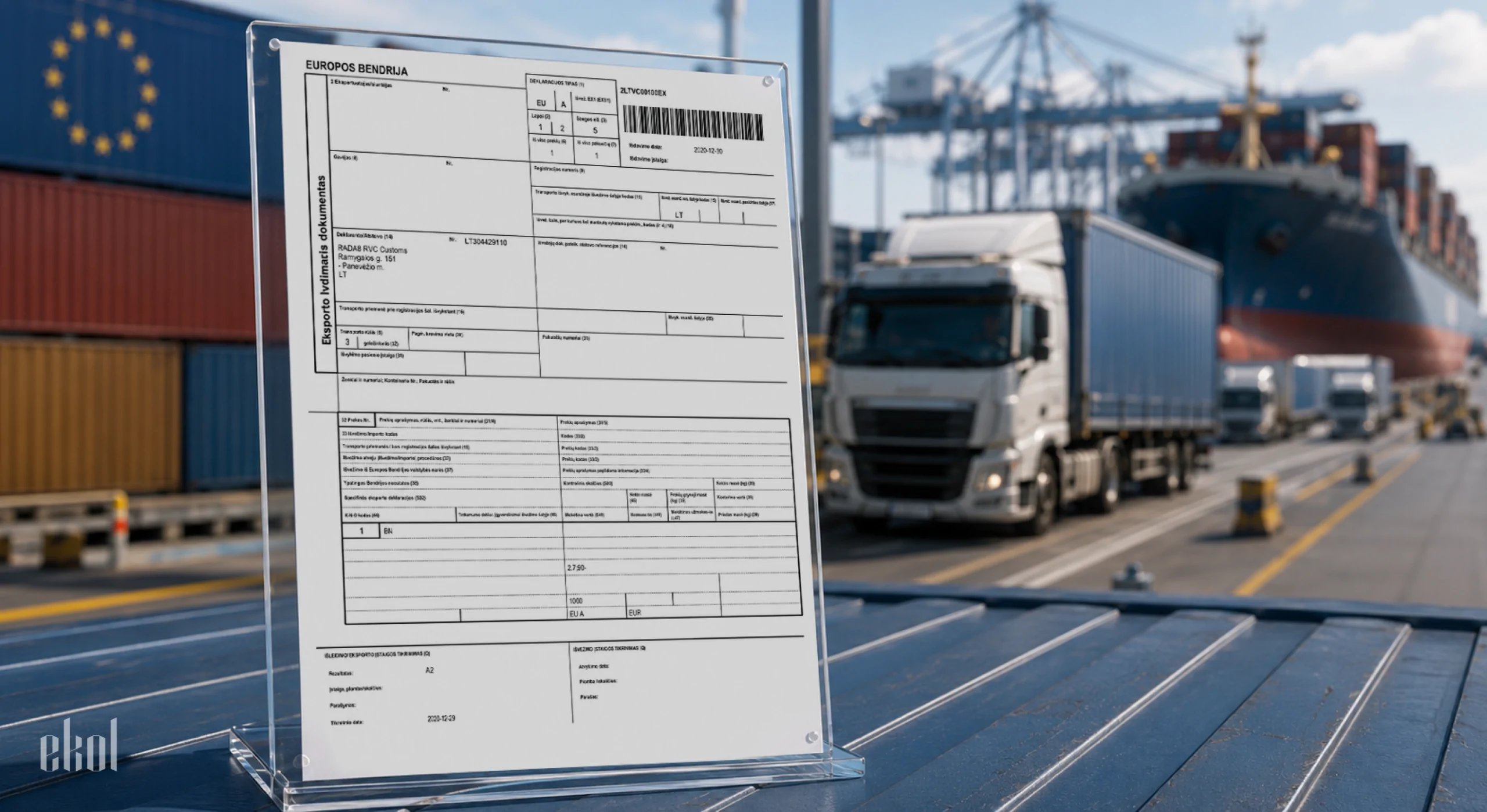
Export requires proper customs clearance and document preparation. For businesses, it is important not only to deliver the goods but also to successfully complete all procedures when crossing the border.

Entering the European Union market opens significant opportunities for Ukrainian companies. However, the success of such expansion depends on the ability to establish proper logistics.

Anna
Business development manager

Volodymyr
Business development manager

Artur
Business Development Manager
