

Digitalisation and Automation of Transport Processes


Digitalisation in transport logistics can reduce cargo handling times by 30–50% and has a positive impact on most internal and external operations of providers. At least, this is the conclusion reached by UNECE experts following an analysis of industry studies.
What does this tell us?
- The transport sector is becoming increasingly dependent on technology. More precisely, the digital component is turning into a focal point of providers’ growth strategies.
- Technology genuinely speeds up logistics, cuts operating costs, and ultimately lowers the price for the end consumer.
- In today’s competitive market, success comes to those who can offer better solutions at lower rates – or something genuinely new and promising.
At Ekol, as one of the leaders in Ukraine’s freight sector, we pay close attention to the role digitalisation plays in transport logistics. Below, we share some key observations and insights from industry research.
Challenges Without Digital Tools – and How to Overcome Them
Automation of transport logistics is no longer a trend, but a commonplace thing, without which business becomes unable to compete with progressive market players. This is because, without automation, which is a consequence of digitalization, companies face difficulties. At the same time, it is quite easy to get rid of them:
| Area | Challenges Without Digitalisation | Impact on Business & Clients | Key Technologies & Solutions |
| Transport management | No GPS tracking, manual route planning | Delays, lost shipments, rising costs | GPS monitoring, telematics, IoT sensors, AI-driven routing |
| Documentation | Paper-based waybills and permits | Errors, delays, and corruption risks | e-TTN, digital signatures, EDMS |
| Logistics processes | Heavy reliance on manual work | Slower fulfilment, human error | TMS, WMS |
| Fleet maintenance | No monitoring of vehicle condition | Frequent breakdowns, downtime, and costs | IoT sensors, centralised control platforms |
| Personnel management | Manual driver schedules, no motivation tools | Driver fatigue, inefficiency, and disputes | Digital schedules, CRM/HRM systems, online training |
| System integration | Absent or via third parties | Data incompatibility, poor exchange | APIs, EDI, cloud services |
| Analytics & forecasting | Lack of data for analysis | Inefficient resource use, loss of competitiveness | Big Data, AI, BI platforms |
| Safety & monitoring | No video surveillance, slow response | Higher accident rates, risks for cargo | IoT devices, smart cameras, cloud-based monitoring |
| Environmental performance | No emissions monitoring | Increased pollution, environmental harm | Green tech, renewables, electric trucks |
Refusing to adopt these tools leads directly to stagnation – or worse, decline, loss of competitiveness, clients, and revenue.
➢ This was precisely the message our team at Ekol Logistics delivered at the recent logistics summit.
The only way forward is full, or at least gradual, digitalisation – with providers, partners, and clients (especially in B2B) adapting together.
Automation of Transport Operations
To summarise, digitalisation brings tangible benefits for both businesses and their customers:
- Real-time vehicle tracking. Always know where a lorry or shipment is – boosting safety and client trust.
- Automated route planning. Systems select the best path considering traffic, roadworks, and weather. Less fuel use, fewer delays, happier customers.
- Digital paperwork. Waybills, permits, and reports are all electronic – faster, more accurate, and impossible to lose.
- Vehicle health monitoring. Systems flag when servicing is due or a breakdown risk appears. Fewer accidents, less downtime, lower repair costs.
- Digital driver schedules. Drivers see routes, tasks, and changes online. This prevents confusion, improves discipline, and optimises workload.
- Automated customer updates. “Your shipment will arrive at 14:30.” A small touch that builds trust and adds a service premium.
- Analytics for managers. Track the most efficient routes, unnecessary expenses, and best-performing drivers. Data becomes the foundation for strategic decisions.
And what’s most interesting is that we haven’t even gotten to the key benefits of digitalization yet.
The Benefits of Digitalisation and Automation
Digital transformation in logistics has both conceptual and practical impact:
- Automates repetitive tasks and routine processes.
- Adds flexibility: monitoring, analytics, and control can be managed remotely from one platform.
- Improves efficiency: automation, robotics, and AI create leaner workflows.
- Reduces risks: fewer accidents, less human error, and safer data handling.
- Cuts costs: fewer staff needed for manual tasks, smarter planning, fact-based scaling.
So, as you can see, the integration of digital technologies into logistics and the automation of key logistics stages are no longer a trend but a necessity, confirmed by the experience of the best market players.

Real-World Examples
In one project, we optimised a client’s distribution chain by deploying a digital platform with integrated WMS and tracking tools. IoT devices monitored both vehicles and cargo, which accelerated operations and nearly eliminated order-processing errors.
The Future of Transport: Digital Transformation Trends
The global spread of IoT devices within transport systems – together with the automation of logistics – is what truly shapes the future of this sector. For example:
➢ Bosch develops IoT platforms for monitoring shipment conditions.
➢ Waymo is testing AI-powered lorries that can independently load, transport, and unload.
➢ IBM and Maersk are combining IoT container sensors with blockchain to establish a new standard for supply chains.
And what about us at Ekol Logistics? We take the best the market has to offer, optimize it, and implement it in your business.
Ready to take your logistics operations to the next level? Entrust it to the experts at Ekol.
read more
Similar articles
For a business, a logistics company is one reliable partner instead of a dozen separate contractors. It handles communication with carriers and quickly resolves force-majeure situations on the road

Without reliable delivery, a farmer’s harvest won’t reach the market on time. A logistics company for a farmer is not just a service provider — it’s a partner on whom the financial outcome of the season depends.

On the night of July 19, 2026, a massive missile attack severely damaged the Ekol Logistics distribution center located in the AMTEL logistics complex.

The changes for Ukrainian exporters in 2026 concern not only export clearance procedures but also the organization of shipments to EU countries.
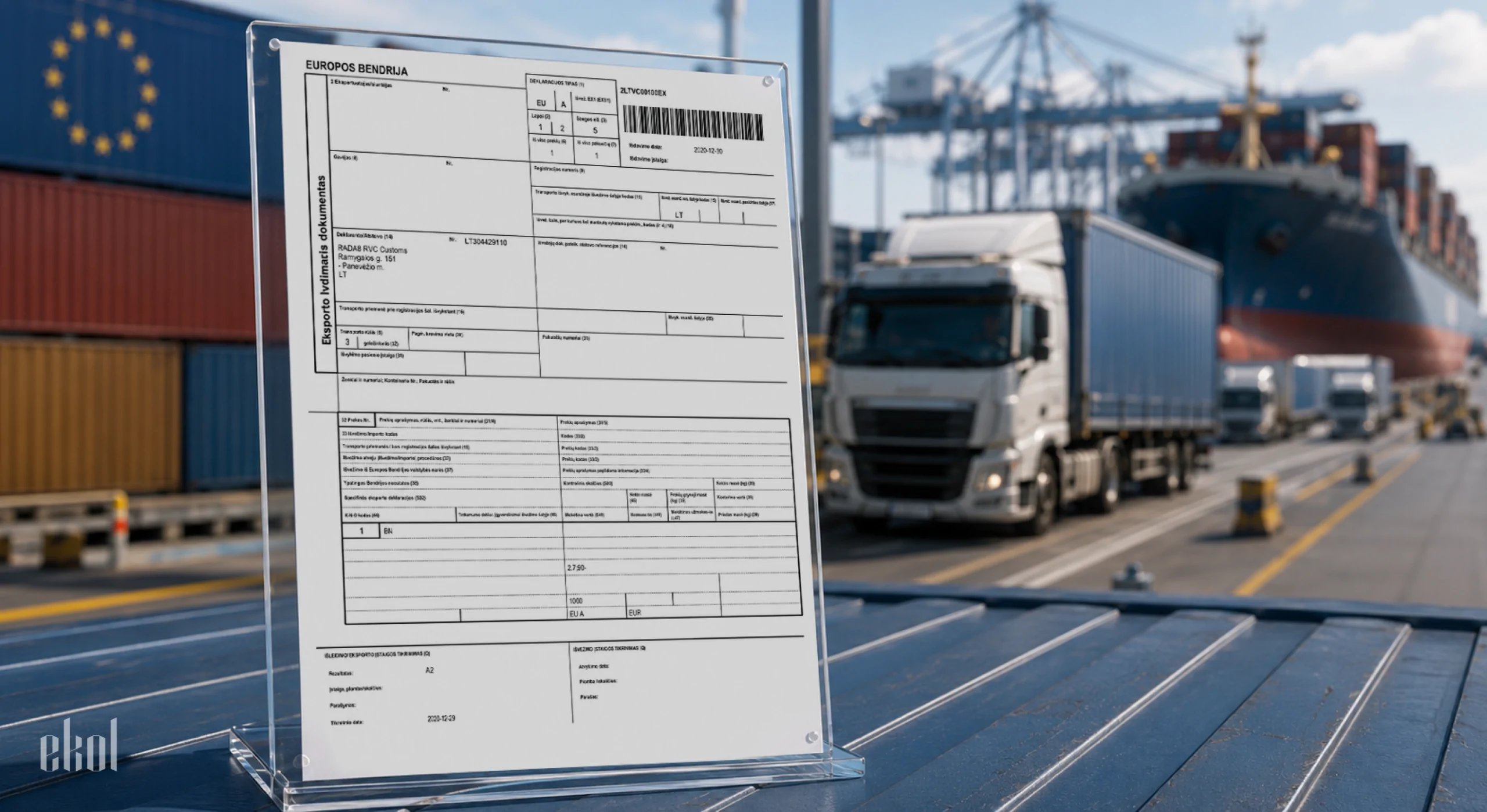
Export requires proper customs clearance and document preparation. For businesses, it is important not only to deliver the goods but also to successfully complete all procedures when crossing the border.

Entering the European Union market opens significant opportunities for Ukrainian companies. However, the success of such expansion depends on the ability to establish proper logistics.

Anna
Business development manager

Volodymyr
Business development manager

Artur
Business Development Manager
