

The Dry Port Ecosystem: How to Unite a Warehouse, Customs, and a Terminal into a Single Digital Hub

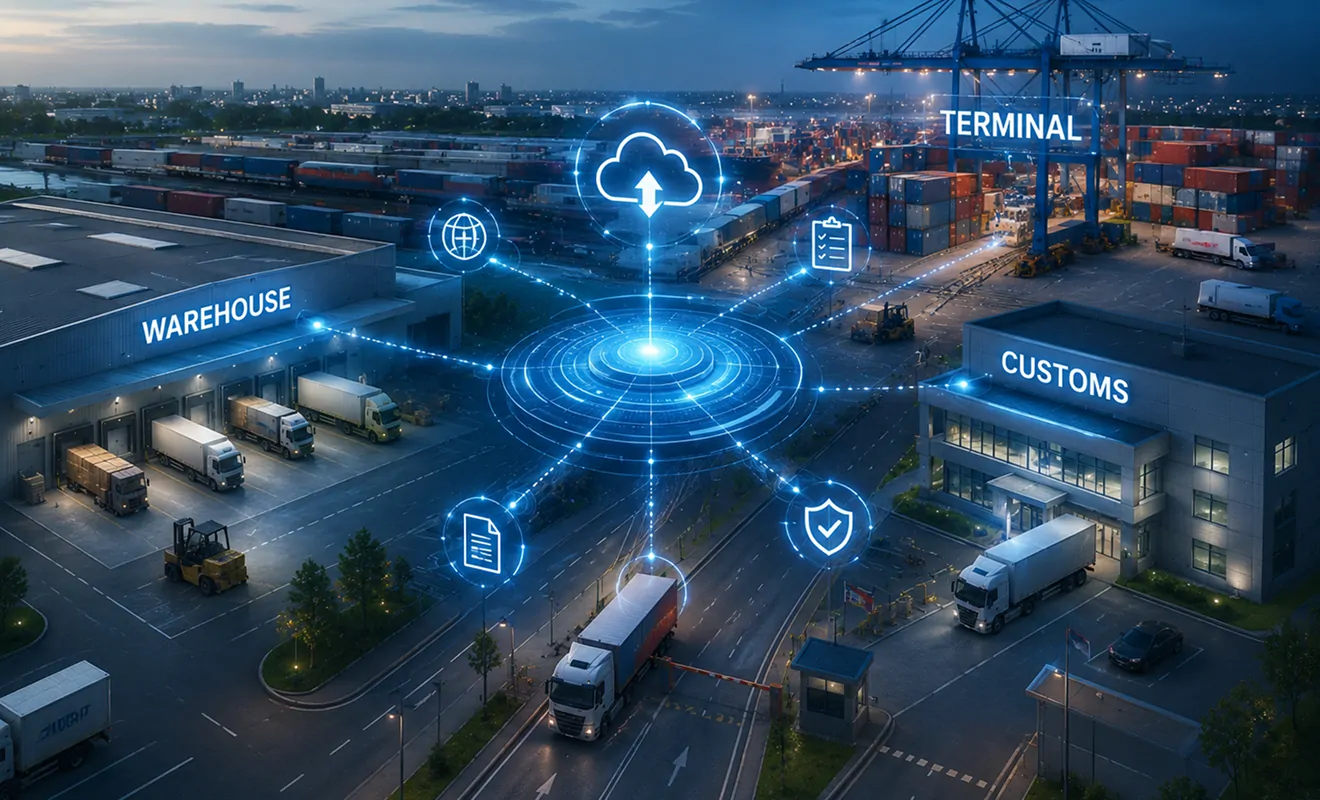
A dry port is one of the solutions to the problem of congestion at seaports and customs-logistics infrastructure. It relocates part of operations inland. But the real impact comes from digital integration. When a warehouse, customs authority, and terminal operate within a unified system, the very logic of cargo processing changes.
In this article, we examine what a dry port is and how a digital hub brings all participants in the process together.
What Is the Dry Port Ecosystem
A dry port is an inland logistics hub located away from the coast but connected to seaports via rail or road routes. It performs the functions of receiving, storing, transshipping, and handling customs clearance of cargo.
In a broader sense, the dry port ecosystem is a coordinated network where every element is linked to another. Cargo flows, document management, declaration, storage, and transit all take place within a single information environment.
The Role of the Dry Port in Modern Logistics
A dry port acts as an intermediate link between international transport corridors and the end consumer. It brings logistics closer to sales markets, relieves pressure on seaports, and ensures more stable control over cargo movement in inland regions.
How a Warehouse, Customs, and Terminal Operate Within a Single System
Operational efficiency is achieved through the integration of key elements. The dry port terminal transmits container data to the customs and warehouse systems, allowing all handling processes to be prepared in advance. Customs clearance at the dry port begins during the transit stage through pre-declaration, while the warehouse receives information for cargo placement planning.
The Digital Hub as the Foundation of Dry Port Management
This is a hardware-software platform that integrates all processes into a single manageable environment in real time. It provides:
- a single point of data entry and processing without duplication;
- integration of customs, warehouse, and terminal information systems;
- online data exchange on container movement and operation status;
- coordination of operational processes among all participants in the chain.
According to Ekol Logistics, the hub is a key element in transforming a dry port into a fully integrated digital logistics platform.
Key Participants in the Dry Port Ecosystem
The dry port ecosystem brings together several key players, each performing a specific role.
| Participant | Role in the Ecosystem |
| Terminal Operator | Receiving, storing, and transshipping cargo; managing technical infrastructure. |
| Customs Authority | Cargo inspection, declaration verification, authorizing release or detention of goods. |
| Warehouse / Storage Operator | Temporary or long-term storage, preparation for dispatch. |
| Carrier | Delivery between the seaport and dry port, and onward to the final recipient. |
| Customs Broker | Preparation and submission of customs declarations. |
| Cargo Owner / Importer | Initiator of logistics and customs processes. |
| IT Platform (Digital Hub) | Integration of all participants, data exchange, document workflow automation. |
An effective dry port ecosystem requires all of them to be connected to a single platform and to exchange data without manual input.
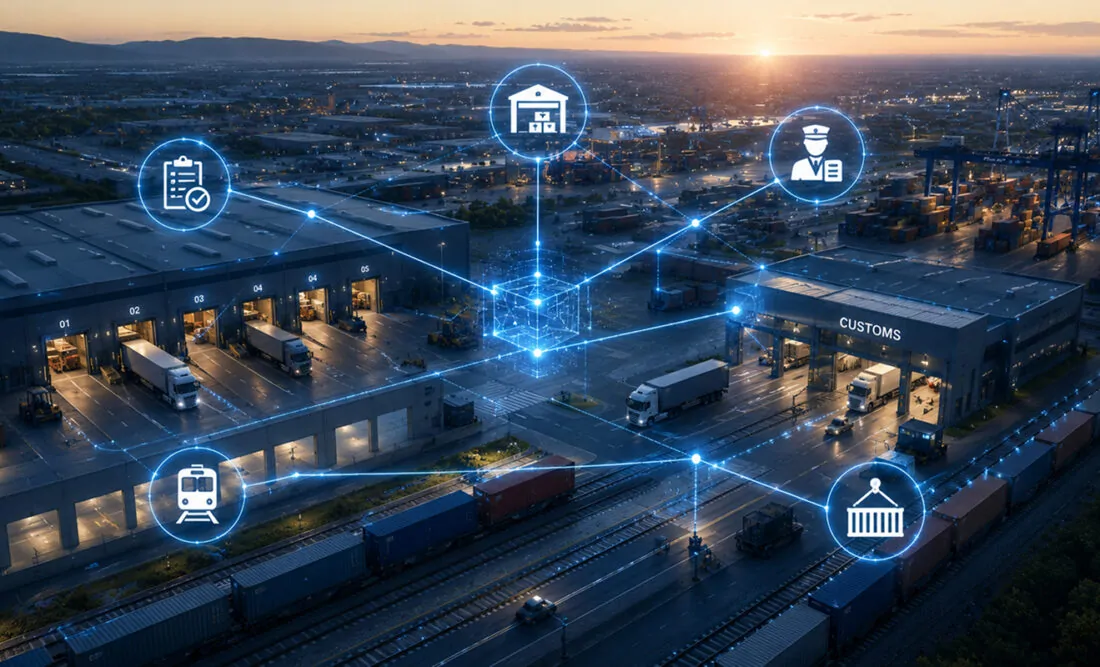
Benefits of Integrating a Warehouse, Customs, and Terminal
Combining these three core elements of a dry port delivers tangible operational advantages:
- Reduced cargo handling time through pre-declaration and automated document verification.
- Lower operational costs by minimizing manual operations and document errors.
- Greater transparency across the logistics chain through all participants’ access to up-to-date data.
An integrated system also improves resilience to disruptions. If one node is delayed, the hub automatically redistributes flows.
Technologies for the Digitalization of Dry Ports
The implementation of a digital hub relies on a set of technological solutions:
- Terminal Operating Systems (TOS). Provide operational management of the container yard — including container placement, equipment management, and operation recording.
- Warehouse Management Systems (WMS). Support inventory tracking and goods movement in the warehouse, including receiving, storage, and dispatch.
- IoT devices and GPS trackers. Collect location and cargo condition data during transportation.
Blockchain solutions are also used to record and protect logistics and customs data against alteration or fraud.
Automation of Document Workflows and Customs Processes
Within the digital hub, automation addresses document management at several levels:
- Documents are uploaded into the system only once. They are automatically distributed among customs authorities, the warehouse, and carriers.
- The platform verifies that documents are filled out correctly and flags errors before submission for customs clearance.
- Pre-declaration is carried out while the container is in transit. This allows customs procedures to be completed before the cargo arrives at the dry port.
Ekol Logistics specialists note that the transition to electronic document management helps significantly reduce cargo handling times in certain operational models. This is supported by data from UN Trade and Development.
Cargo Flow Management in the Digital Hub
Based on data from the technological infrastructure, the system performs the following in real time:
- analysis of cargo volumes awaiting processing;
- assessment of warehouse and terminal capacity utilization;
- forecasting the arrival of new consignments;
- monitoring the status of customs clearance.
The digital hub thereby automatically optimizes resource allocation and cargo processing priority.
Challenges in Building a Unified Digital Ecosystem
Despite the clear advantages, implementing a digital ecosystem comes with a number of challenges:
- Technical system integration. Terminals, warehouses, and customs authorities often operate on different platforms, which complicates data exchange.
- Regulatory constraints. The customs legislation of certain countries does not always support electronic declaration and digital document management.
- Resistance from market participants. Some carriers and brokers are not ready to transition to new digital systems.
- Cybersecurity and confidentiality. Centralized platforms require enhanced data protection against cyberattacks.
Creating and maintaining a digital hub also requires significant investment.
How to Implement a Digital Hub for a Dry Port
The process consists of the following stages:
- Analysis of existing flows. Identifying how documents are transmitted, where delays occur, and which systems are already in use.
- Platform development. Selecting a solution with mandatory integration with customs authorities and the services of key carriers.
- Pilot implementation. Launching on a limited cargo volume to identify errors and refine the system.
- Scaling and training. Expanding across the entire ecosystem and preparing all process participants.
The key condition is involving customs authorities and major carriers as early as the pilot stage.
The Future of Dry Ports in International Logistics
The dry port is evolving toward autonomy and intelligent management. Over the coming decade, the key trends will be:
- AI for cargo flow forecasting.
- Autonomous equipment (unmanned cranes and machinery to accelerate container handling).
- Integration with seaports.
- Transition to electric transport and renewable energy sources in line with ESG requirements.
Countries that develop dry ports and digital hubs gain a competitive advantage in global supply chains.
Conclusion
The dry port ecosystem is modern logistics’ answer to increasingly complex international supply chains. Uniting a warehouse, customs authority, and terminal within a digital hub reduces cargo handling times and cuts costs.
Ekol Logistics supports companies investing in logistics digitalization — from transportation organization to comprehensive customs clearance.
FAQ
How does a dry port function within a logistics chain?
After arriving by sea, goods are transferred to containers or flatcars and transported to the dry port by rail or road. There, customs clearance, document verification, cargo sorting, and onward distribution or handover to recipients take place.
How does a dry port differ from a regular warehouse or terminal?
A warehouse is designed for storage; a terminal is designed for cargo transshipment and handling. A dry port combines both functions and additionally includes customs clearance and participant coordination within a single digital environment.
How does customs operate at a dry port?
It is integrated into a unified digital process. Documents are verified in advance, pre-declaration takes place during cargo transportation, and the release decision can be made before the cargo even arrives at the dry port.
read more
Similar articles
The changes for Ukrainian exporters in 2026 concern not only export clearance procedures but also the organization of shipments to EU countries.
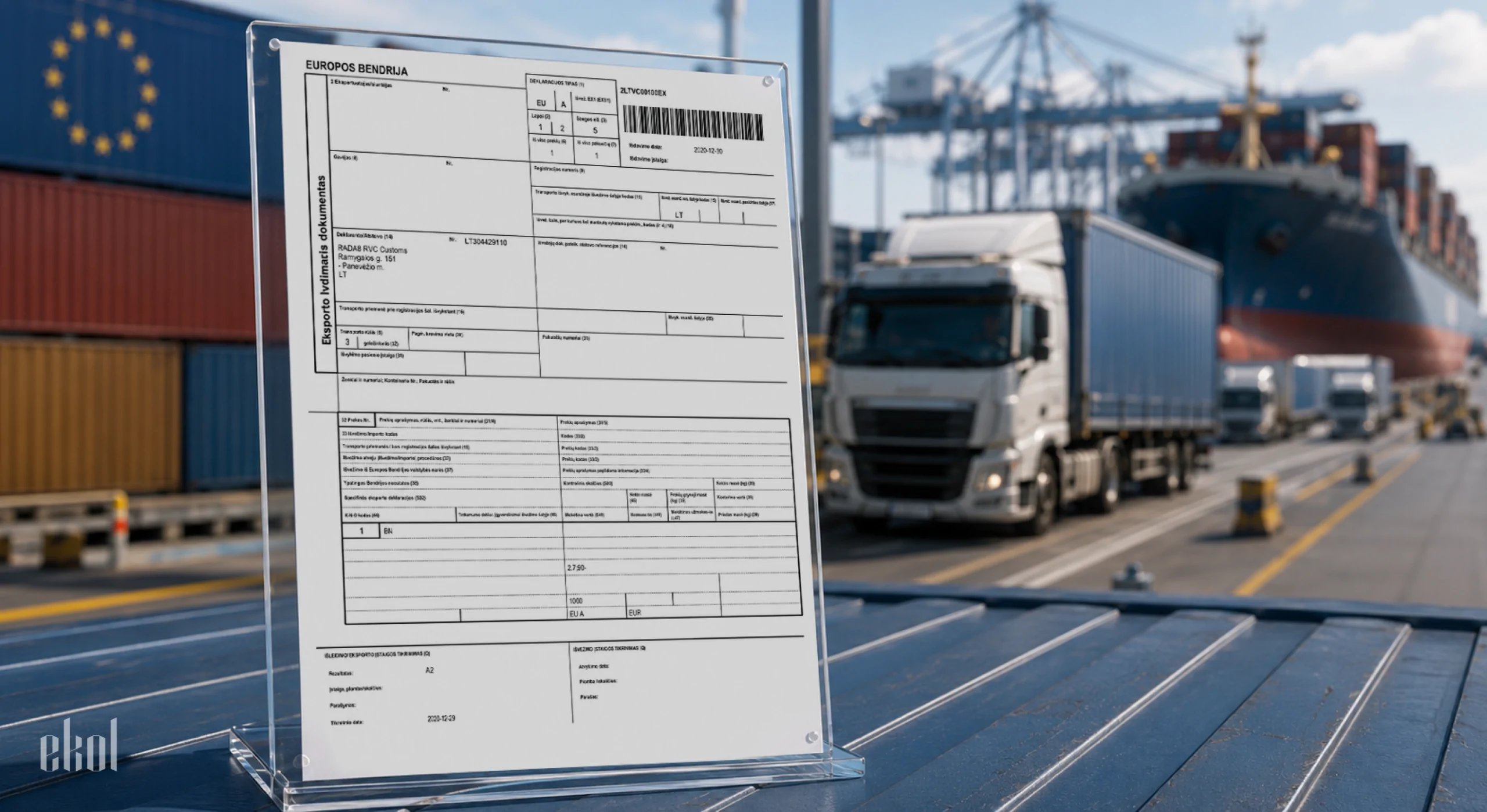
Export requires proper customs clearance and document preparation. For businesses, it is important not only to deliver the goods but also to successfully complete all procedures when crossing the border.

Entering the European Union market opens significant opportunities for Ukrainian companies. However, the success of such expansion depends on the ability to establish proper logistics.
Entering the European Union market opens significant opportunities for Ukrainian companies. However, the success of such expansion depends on the ability to establish proper logistics.
If you order goods from abroad or import a commercial batch of products, customs payments are unavoidable.
Logistics offers two tools for shipping from Germany: Less-than-Truckload (LTL) consolidation and Full Truckload (FTL) shipments.

Anna
Business development manager

Volodymyr
Business development manager

Artur
Business Development Manager
