

AI Agents in Logistics: How Artificial Intelligence Generates Requests and Plans Routes in 2026

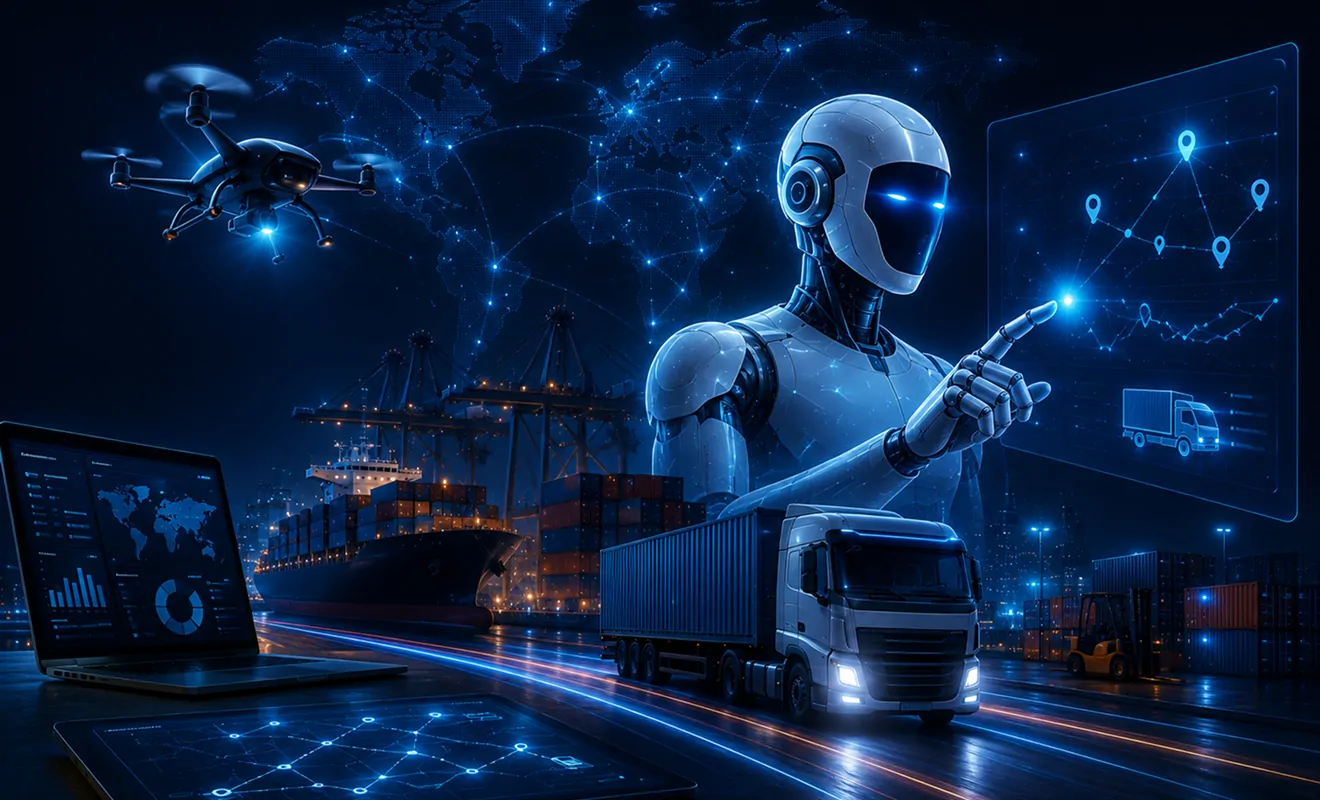
Just a few years ago, a dispatcher would spend an hour on a single request. Today, AI agents in logistics accomplish the same task in minutes – without phone calls or errors. In 2026, the question is no longer whether to implement AI into operations. The real challenge is how to do it right.
What Are AI Agents in Logistics
These are software systems that independently perform operational tasks: they collect data, make decisions, and interact with platforms without human involvement.
Unlike conventional bots, AI agents in logistics are capable of forecasting. They simultaneously assess weather conditions, road situations, warehouse status, and cargo priority. Key applications include:
- generating transportation requests;
- selecting routes with respect to restrictions;
- calculating costs;
- monitoring shipments in real time.
This is precisely why the role of AI agents in logistics is growing: they take on the routine tasks that previously consumed a significant portion of managers’ working time.
How AI Agents in Logistics Generate Transportation Requests
The traditional request workflow follows a sequential chain: client inquiry → manual parameter entry → transport availability check. The entire process takes considerable time.
AI agents in logistics significantly shorten this cycle. They read incoming requests, extract the cargo type, addresses, and deadlines, verify these against planning systems, book a time slot, and generate the document. A human only needs to verify the finished result.
According to specialists at Ekol Logistics, automating the request process noticeably reduces the operational load on the department within the very first months. An agent handles varying volumes of information with no loss of speed.
How Artificial Intelligence Analyzes Data for Route Planning
Building a route is a multifactor task: cargo weight, tonnage restrictions, customs crossings, delivery time windows. An experienced dispatcher can account for a limited number of factors – a model is capable of processing far more. AI agents in logistics collect data from multiple sources simultaneously, for example:
- vehicle GPS telematics;
- open data from road authorities;
- internal statistics on completed trips;
- WMS data on warehouse readiness for shipment, and more.
The result is several route options with calculated risks and costs. This level of analytics is unattainable with manual planning.
Automated Calculation of Costs and Delivery Times
Traditional cost calculations often yield significant deviations from actual expenses. By contrast, AI agents in logistics factor in fuel, customs duties, insurance, and real-time exchange rates – this increases forecast accuracy.
Below is a comparison of key operations before and after implementing an automation algorithm.
| Task | Without AI | With AI Agent | Result |
| Request processing | Manual, step-by-step | Automated | Significantly faster |
| Route calculation | Dispatcher’s experience | Algorithm + data | Fewer empty kilometers |
| Cost calculation | Excel / price lists | Dynamic model | Higher accuracy |
| Cargo monitoring | Phone / email | Auto-tracking | Real-time status |
| Disruption response | Unautomated replanning | Auto-correction | Minimal downtime |
The specific outcome depends on the scale of the business and the level of platform integration. The table reflects the qualitative changes typical of most implementations.
Route Optimization Using AI Agents
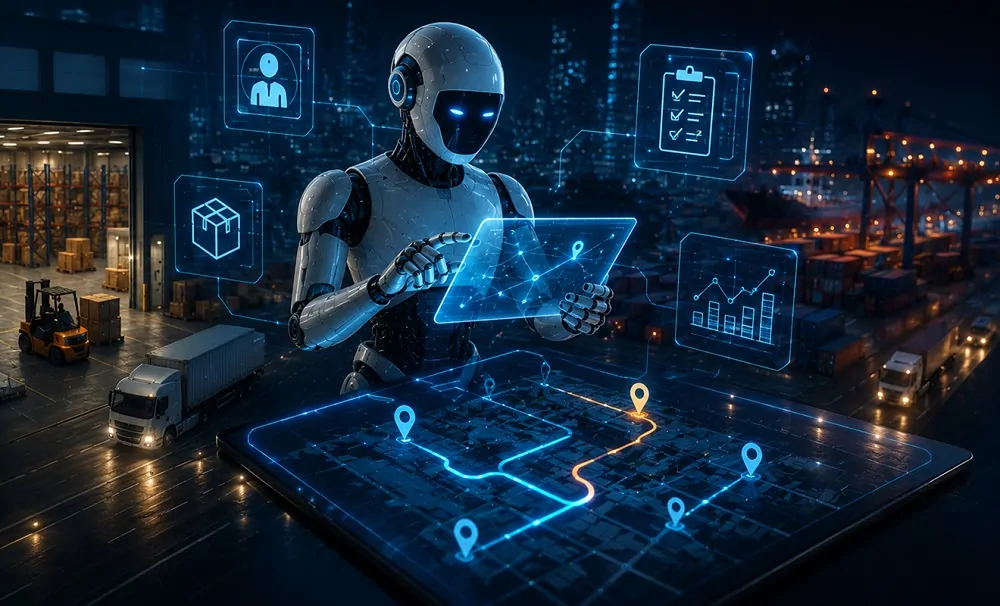
Optimization is not a one-time build, but a continuous adjustment process en route. The agent recalculates the route in real time in the event of accidents, closed border crossings, or delays. This kind of monitoring reduces idle mileage and fuel costs.
AI solutions for logistics are most effective for:
- multi-stop routes with numerous waypoints;
- mixed transportation combining road and rail;
- urgent deliveries with strict deadlines.
The algorithms account for client-specific requirements: restrictions on nighttime entry or mandatory transit through a specific warehouse.
Integration of AI Agents with CRM, TMS, and WMS Systems
The real effectiveness of an intelligent system becomes apparent through end-to-end integration. The best way to understand what AI agents in logistics are is to observe them at the point where the key management layers converge:
- TMS (Transportation Management System) – manages transportation;
- WMS (Warehouse Management System) – manages the warehouse;
- CRM (Customer Relationship Management) – handles customer requests.
API-based connectivity requires no replacement of existing systems.
The Ekol Logistics team confirms: interaction between platforms noticeably reduces the time from order placement to shipment. Manual handoffs and data duplication between departments are eliminated.
Benefits of Using AI Agents for Logistics Companies
The results of implementation are visible across the core processes now managed by AI agents in logistics:
- request processing time is reduced several times over;
- route costs decrease thanks to more accurate planning;
- delivery time forecasting with minimal deviation;
- automated reports without manual data consolidation.
Dispatchers gain time for non-standard situations; management receives high-quality analytics for strategic initiatives.
Potential Risks and Limitations of AI Solutions in Logistics
AI in logistics in 2026 is not a magic cure-all. The quality of the algorithm is directly dependent on input data: outdated tariffs or inaccurate maps lead to flawed decisions.
Excessive automation without human oversight also carries risks. An agent may optimize for a single metric at the expense of operational agreements.
Practical limitations include:
- complexity of connecting to legacy systems;
- the need for model configuration and training;
- questions of accountability for unsupervised system operation.
All of these can be addressed through phased implementation with clear KPIs defined at each stage.
How AI Agents in Logistics Are Changing the Work of Managers
The primary shift is a redistribution of responsibilities. A dispatcher is no longer a data entry operator – they become an analyst who oversees the system and resolves non-standard situations.
Companies that have implemented AI solutions for logistics report a reduction in staff turnover within transportation departments. Routine tasks disappear, while the demand for understanding algorithms and platforms grows.
Trends in AI Logistics Development in 2026
Three directions shaping AI in logistics in 2026:
- Multimodal planning – agents optimize road, rail, and sea transport within a single delivery chain.
- Predictive maintenance – analytics from onboard sensors forecast vehicle breakdowns before they occur.
- Digital twins – companies test route changes without real-world risk.
The results of how AI agents in logistics operate are already visible today, as systems provide accurate forecasting without the need for constant oversight.
Conclusion
AI agents in logistics are an operational reality for competitive companies. They reduce costs, improve accuracy, and give teams the space to focus on work that genuinely requires a human touch.
Ekol Logistics already applies digital solutions to optimize its clients’ supply chains. Start with an audit of a specific process – that is where automation will deliver the fastest results.
FAQ
How do AI agents in logistics behave in the event of a complete loss of connectivity or internet access on the route?
AI agents in logistics switch to autonomous mode and use locally downloaded maps and saved templates. Once the network connection is restored, the system automatically synchronizes updated coordinates and data with the central database.
How long does it take to configure the model for a specific business?
It depends on the volume of accumulated data and the complexity of processes. Basic configuration takes several weeks; full accuracy is achieved after a period of operation on real-world tasks.
Do AI agents in logistics handle hazardous or oversized cargo?
Yes, provided that ADR classifications and the relevant permits have been entered into the system. Final confirmation for non-standard shipments is recommended to remain with the dispatcher.
Under what conditions does implementing AI in logistics pay off most quickly?
With a steady flow of orders, clearly defined processes, and an available base of historical data. Even partial automation – such as request generation alone – delivers strong results.
read more
Similar articles
For a business, a logistics company is one reliable partner instead of a dozen separate contractors. It handles communication with carriers and quickly resolves force-majeure situations on the road

Without reliable delivery, a farmer’s harvest won’t reach the market on time. A logistics company for a farmer is not just a service provider — it’s a partner on whom the financial outcome of the season depends.

On the night of July 19, 2026, a massive missile attack severely damaged the Ekol Logistics distribution center located in the AMTEL logistics complex.

The changes for Ukrainian exporters in 2026 concern not only export clearance procedures but also the organization of shipments to EU countries.
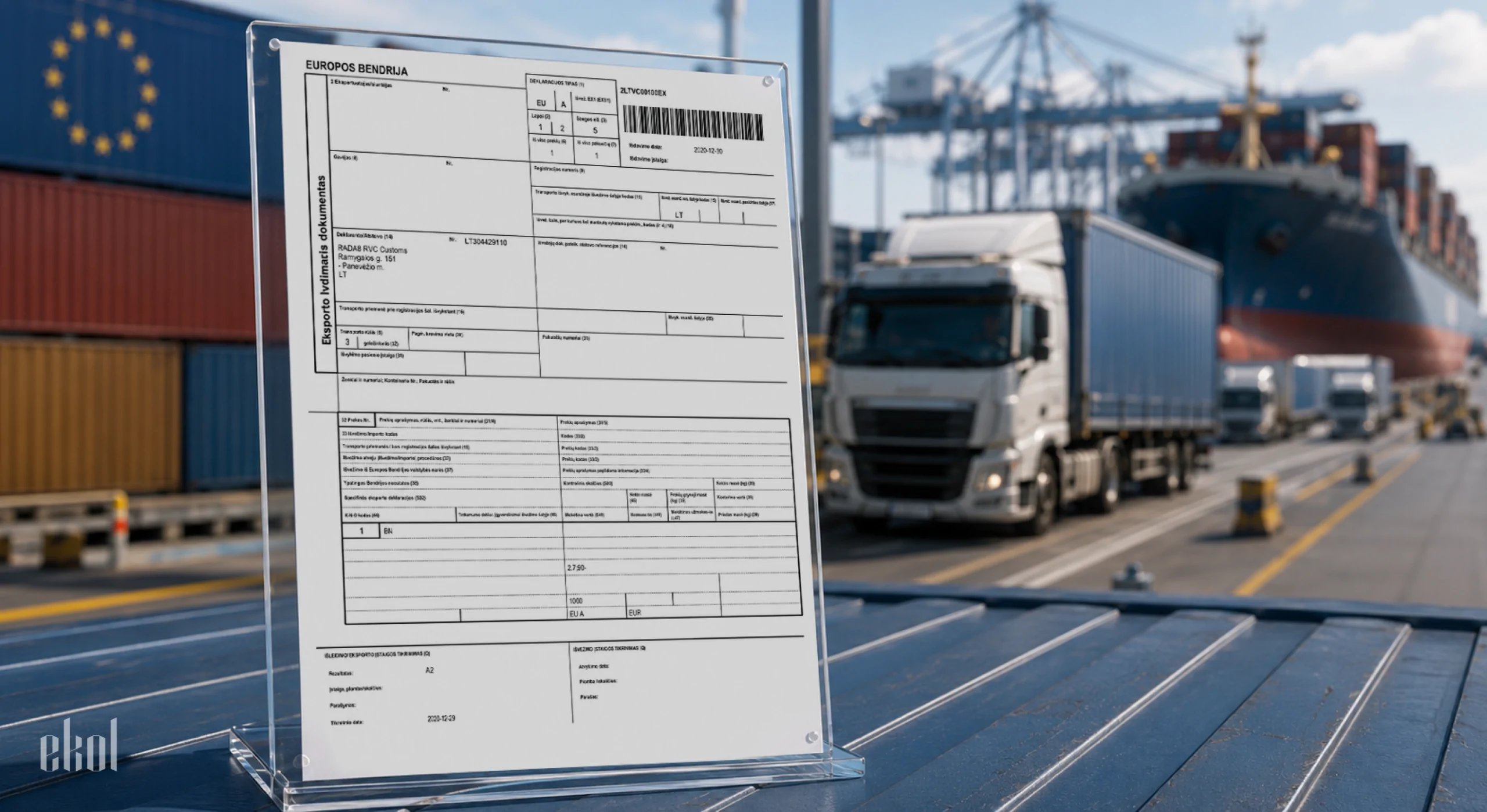
Export requires proper customs clearance and document preparation. For businesses, it is important not only to deliver the goods but also to successfully complete all procedures when crossing the border.

Entering the European Union market opens significant opportunities for Ukrainian companies. However, the success of such expansion depends on the ability to establish proper logistics.

Anna
Business development manager

Volodymyr
Business development manager

Artur
Business Development Manager
