

Freight Forwarding from Turkey to Ukraine: Routes, Costs, and Delivery Times


Despite their geographical proximity, the logistics of importing from Turkey to Ukraine has its nuances. In this article, we discuss what needs to be considered and how freight transportation between these countries takes place.
Main Cargo Delivery Routes: Turkey – Ukraine
When it comes to freight forwarding from Turkey to Ukraine, logistics schemes are built taking into account geographical features, the current geopolitical situation, and the specifics of the goods.
The most commonly used key logistics corridors include:
Land Delivery.
Routes are constructed using transit through EU countries. In most cases, this is the optimal variant when it is important to maintain a balance between cost and transportation speed. Transit usually passes through the territory of Bulgaria and Romania. Using this specific route allows for prompt cargo delivery while minimizing transshipment time.
Sea Freight.
Ocean freight is the optimal solution for large batches of goods. Shipping from Turkey to Ukraine by sea allows for reduced costs when importing significant volumes of raw materials, equipment, and other oversized products.
Multimodal Transportation.
Multimodal transportation is one of the most effective methods and is frequently chosen by Ekol clients. Combining road, sea, and rail transport allows for bypassing “bottlenecks” and building the most efficient logistics.
The following table will help evaluate the features of different logistics solutions:
| Route | Optimal for | Advantages |
| Land (Road) | Urgent cargo, groupage (LTL) | Flexibility, speed, “door-to-door” delivery |
| Sea | Large batches (FCL), raw materials | Lowest cost for frequent shipments and large volumes |
| Multimodal | Complex logistics chains | Route optimization and avoiding border queues |
| Rail | Heavy cargo, metal, fuel | High load capacity and schedule stability |
Types of Transport for Carrying Cargo from Turkey
The choice of transport depends on the budget, type of cargo, and desired delivery speed. Ekol, for instance, offers several solutions:
- Road Transport. The most popular option for fast transportation of groupage and full truckload shipments. This is the optimal choice for most categories of goods: from textiles to equipment. The carrier is responsible for cargo safety, and thanks to regular trips, delivery times are highly predictable.
- Container Shipping. Dimensional variability of containers allows for selecting the optimal option according to the specifics of the cargo. This is often the most cost-effective solution for goods that do not require urgent delivery from Turkey to Ukraine, such as rolled metal or construction materials.
- Railways. This type of transport is less flexible in terms of targeted delivery; however, it is ideal for bulk, liquid, or high-tonnage cargo.
Delivery Times for Cargo from Turkey to Ukraine
Terms depend on the type of transport, route, and customs workload. On average, cargo delivery from Turkey to Ukraine takes from 5 to 14 days:
- Full Truckload (FTL) – 5-8 days: a direct flight without additional reloading, which significantly reduces travel time;
- Groupage Cargo (LTL) – 7-14 days: time increases due to the need for consolidation at a warehouse in Turkey and waiting for transport;
- Ferry Delivery – 10-14 days: the term depends on the waiting time for the vessel’s departure and the speed of the sea crossing itself.
It is important to understand that these terms are baseline. In practice, they may vary depending on the situation at the border. However, Ekol’s professional forwarders forecast potential delays in advance to offer alternative routes and optimize the document preparation process. Our specialists take over communication with all links of the logistics chain to deliver the cargo to the customer as quickly as possible.

Cost of Freight Forwarding: Turkey – Ukraine
International delivery rates are formed individually and depend on several factors:
- Weight and volume of the cargo;
- Type of transport;
- Distance and selected route;
- Type of cargo (whether special conditions are required: strict temperature control, security, additional protection against damage);
- Seasonality;
- Need for transshipment and warehousing.
Additionally, the final cost is affected by transit expenses, customs duties, and forwarding services.
Ekol logisticians note: “One of the most common mistakes made by importers is excessive cost-cutting at the stage of choosing a carrier without considering their specific experience on the Turkish route.”
Turkish carriers often offer attractive rates but do not always consider the peculiarities of Ukrainian legislation. Ultimately, this can lead to additional costs or delays. Therefore, at Ekol, we recommend focusing not on the starting price per kilometer, but on the total cost of delivery — taking into account all possible risks and associated expenses. This approach allows for a clear understanding of the final transportation cost from the very beginning — without hidden fees or unforeseen expenses during the process.
Customs Clearance of Goods when Importing from Turkey
Thanks to the Free Trade Agreement between Ukraine and Turkey, over 10,000 items are cleared at preferential rates. However, this does not eliminate the need for meticulous document preparation.
To import goods from Turkey, the following are required:
- Commercial invoice;
- Packing list;
- International consignment note (CMR);
- Certificate of origin;
- Permits (for goods subject to sanitary, environmental, or phytosanitary control).
The correct classification of cargo according to the UKT ZED (HS Code) is of critical importance. An error in the code can cost not only time but also additional financial expenses. Understanding the importance of this stage, Ekol specialists handle all the work of processing accompanying documents so that customs control passes quickly and without additional delays.
Which Cargoes are Most Often Transported from Turkey
Analyzing import statistics, textiles, clothing, footwear, leather goods, food products, electronics, household appliances, construction materials, auto parts, and industrial equipment are frequently brought from Turkey to Ukraine. If you plan to import any of these or other cargo and do not know how to deliver goods from Turkey, entrust this work to specialists — the Ekol team. We ensure full control over the supply chain, including real-time cargo tracking, so you can be confident in its safety at every stage.
FAQ
How long does it take to deliver cargo from Turkey to Ukraine?
On average, from 5 to 14 days.
What are the main freight routes between Turkey and Ukraine?
The basic land route is via Bulgaria and Romania; the sea route is to the ports of Greater Odesa.
What is the average cost of cargo delivery from Turkey to Ukraine?
The cost is calculated individually each time and depends on many factors.
What types of transport are used for cargo transportation from Turkey?
Most often — road and sea transport.
read more
Similar articles

Logistics offers two tools for shipping from Germany: Less-than-Truckload (LTL) consolidation and Full Truckload (FTL) shipments.

A dry port is one of the solutions to the problem of congestion at seaports and customs-logistics infrastructure. It relocates part of operations inland. But the real impact comes from digital integration.

Most FPV components are sourced from China. This is a long route with temperature fluctuations and extended storage in transit zones.

Last-mile delivery is the final stage of the logistics chain, which shapes both the service cost and customer loyalty.
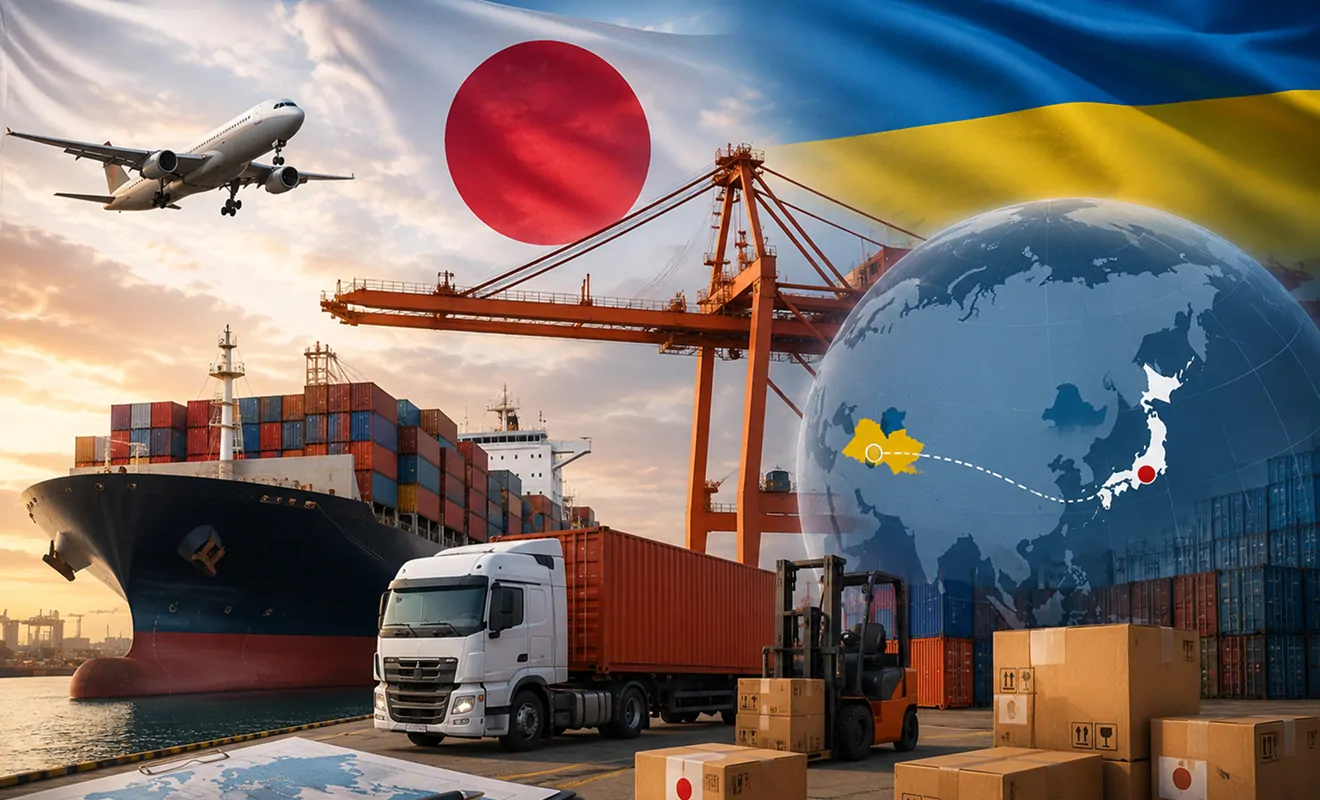
There are more than 8,000 kilometers between Ukraine and Japan, with no shared border or direct rail connection. Despite this, imports from Japan to Ukraine are growing

Just a few years ago, a dispatcher would spend an hour on a single request. Today, AI agents in logistics accomplish the same task in minutes – without phone calls or errors.

Anna
Business development manager

Volodymyr
Business development manager

Artur
Business Development Manager
