

Automation and Robotics in Warehousing and Logistics Enterprises


Logistics and warehousing are constantly evolving. To succeed in this field, it is no longer enough to simply recruit staff responsibly. It is essential to continuously implement new technologies. This is where understanding what warehouse automation is becomes crucial.
Many successful enterprises are already using robotic systems developed through programming and well-designed algorithms. In addition, new robotics solutions are actively being tested today, which in 5–10 years may become a common feature in logistics centers.
What is Warehouse Automation and Robotics
According to recent data from LogisticsIQ, the warehouse automation market is projected to reach $55 billion by 2030. The compound annual growth rate (CAGR) for the period from 2024 to 2030 is expected to be around 15%.
Warehouse automation is the implementation of technologies to perform operations more efficiently. Depending on the needs, it can be implemented either fully or partially.
How Does an Automated Warehouse Work? In a fully automated warehouse, most tasks are carried out by robots and specialized machines, while staff are involved only in minimal operations. A great example of this approach is Alibaba’s warehouse in Shanghai.
On the other hand, in partially automated warehouses, robots and humans work together as a team. Tasks are distributed so that each performs what they are most efficient at. This principle is applied, for instance, in Amazon’s warehouses.
Yes, Scott Dresser, Vice President of Amazon Robotics, notes: “Thanks to advances in artificial intelligence, these technologies integrate seamlessly and will help us increase productivity by about 25% at next-generation fulfillment facilities. This allows us to serve customers more efficiently while supporting the employees who make it happen.”
For warehouse process robotics, industrial or collaborative robots are indispensable, as they significantly improve warehouse efficiency:
- Industrial robots completely replace manual labor by performing complex and repetitive tasks. This category includes lifting mechanisms and automated conveyors.
- Collaborative robots work alongside humans. They can be programmed, enabling them to operate autonomously or under operator supervision. Examples include manipulators for moving goods and packing machines.
For navigation, drones are increasingly being used to quickly check inventory on shelves.
Reliable robotic platforms are becoming highly popular for automating such critical processes as:
- shelf maintenance;
- cargo movement;
- order picking.
Warehouse robotics is gaining tremendous popularity.
Key Automation Technologies in Logistics
Digitalization has become a necessary condition for the development of logistics. Technologies such as the Internet of Things (IoT), blockchain, artificial intelligence, and others help increase efficiency, improve service quality, and strengthen companies’ competitive positions.
Modern logistics is a complex process that includes transportation, packaging, storage, and delivery of goods. We believe that the introduction of digital technologies makes operations more optimized, safer, and more efficient. It is no surprise that digital innovations are a top priority for many modern companies.
The main solutions actively used in logistics:
| Example | Description |
| Process Automation | The use of digital technologies makes it possible to automate many routine operations. This reduces the number of errors, speeds up data and order processing, and increases overall productivity. Modern warehouse automation solutions help create a unified database, optimize planning, track cargo, and improve interaction with customers and partners. |
| Analytics Systems and Big Data | The analysis of large volumes of data enables companies to gain valuable insights, forecast demand, and find optimal solutions. Analytical tools help evaluate route efficiency, optimize inventory management, and more accurately predict delivery times. |
| Internet of Things (IoT) | IoT technologies make it possible to collect data on the condition of goods, equipment, and vehicles in real time. This allows for continuous monitoring of product location, storage conditions, and security. |
| Artificial Intelligence (AI) and Machine Learning | Used for automated decision-making, demand forecasting, route planning, and inventory management optimization. |
Warehouse robotics is one of the most promising development paths that can help companies stay ahead of the competition. That is why, in our view, now is the right time to consider how to adapt these technologies to the specific needs of your business.
Warehouse Management Software
Around the world, warehouse automation solutions are becoming increasingly popular. This proves that modern technologies deliver results, and their implementation improves not only warehouse operations but also overall logistics processes.
Companies are adopting advanced warehouse management software (WMS) to meet market demands. Automating tasks such as order picking, sorting, and internal transportation helps businesses manage warehouses more efficiently and speed up product delivery.
Benefits of Automation for Business
Properly implemented automation can bring companies numerous advantages:
- Increase safety levels;
- Avoid downtime;
- Address labor shortages, as robots can operate around the clock;
- Perform specific tasks faster and with greater accuracy;
- Eliminate potential errors;
- Use warehouse space more efficiently, since there is no longer a need to leave large areas for equipment such as forklifts.
Modern WMS systems make it possible to optimize processes and fully realize the benefits of warehouse automation.
Challenges and Limitations of Implementation
Although automation is truly revolutionizing the way modern companies operate, its implementation requires a well-thought-out strategy. Ill-considered or hasty actions may lead to negative consequences.
First and foremost, it is important to remember that even the most advanced automated processes are always overseen by humans. Therefore, proper staff training for working with new technologies is of key importance.
In addition, business owners who plan to automate their warehouses must take into account the significant investments required. To ensure these costs pay off, the entire process should be carefully planned. It is also crucial to properly integrate new systems with existing ones to guarantee seamless and high-performance operations.
Examples of Successful Automation
In the logistics industry, where speed and accuracy are critical, the latest warehouse management technologies play a key role.
For instance, PURU offers solutions for e-commerce, including advanced developments that enable efficient and accurate order fulfillment.
Another example is the use of automated sorting machines. They allow goods to be sorted quickly and precisely, which is crucial for the fast-paced world of e-commerce and distribution.
Depending on warehouse specifics and market requirements, companies can adjust their processes by applying different technologies. However, we believe the most important factor is the ability to properly adapt these solutions to the unique needs of the business.
Prospects for the Development of Automation in Logistics
There are many signs indicating that the future of numerous industries lies in automation, which has already demonstrated excellent results and will therefore be adopted more widely. Robots will play an increasingly important role in logistics, as they are already capable of managing warehouses efficiently, and their performance is constantly improving.
In our view, automation and robotics may soon become indispensable for carrying out complex tasks.
Conclusions
Thanks to modern technologies, the processes of order picking and sorting are becoming more accurate, faster, and more efficient. However, it should not be forgotten that the final control over automated processes still belongs to humans, who remain a key element of the entire warehouse ecosystem.
Nevertheless, given the rapid development of this field, the human role will gradually decrease year by year. The introduction of innovations in warehouse operations is not only a response to current market challenges but also a strategic investment in the future.
FAQ
What is the difference between automation and robotics in logistics?
The key difference lies in the level of human involvement. Automation primarily assists specialists in their work, while robotics, in some cases, can fully replace them by performing much more complex tasks. Robotics is only a part of automation. It cannot exist without it, whereas automation is possible even without robots, which makes it a broader concept.
What types of robots are used in modern warehouses?
Among them are:
- High-performance sorters;
- Stacking cranes and containers;
- Autonomous vehicles (AGV, AMR);
- Conveyors and transporters;
- Automated shelving systems.
Robots are often equipped with sensors that collect real-time data, scanners, and barcode recognition systems.
read more
Similar articles
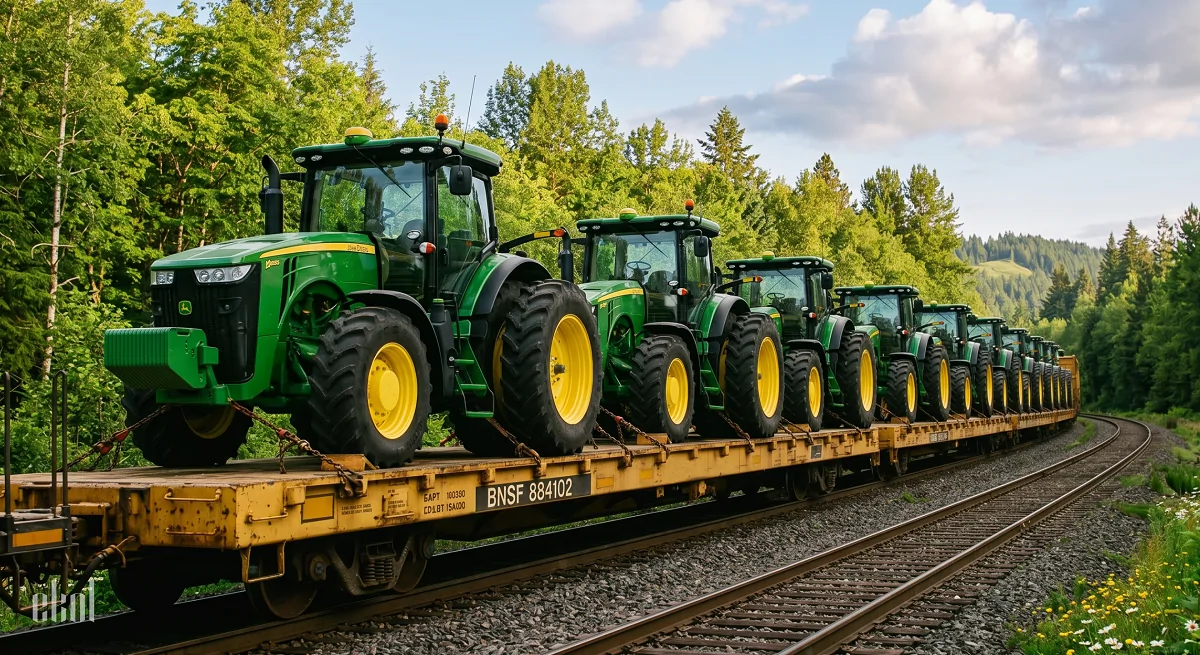
Proper tractor transport across Ukraine starts with assessing the machine’s dimensions and selecting the right type of transport. This approach helps avoid fines and delays along the route.

For years, the domestic market relied on purchases from the PRC, but the era of Chinese factory monopoly is gradually coming to an end. Entrepreneurs are turning to other Asian countries, weighing product quality and partner reliability.

Back in 2021, Ukrainian legislation officially regulated the delivery scheme in which several modes of transport are combined for a single route.
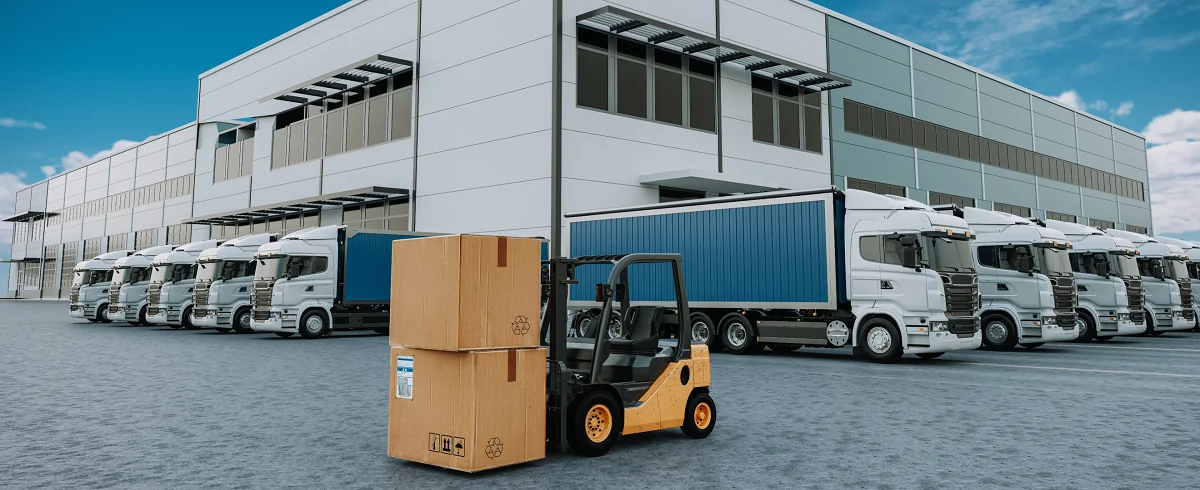
For a business, a logistics company is one reliable partner instead of a dozen separate contractors. It handles communication with carriers and quickly resolves force-majeure situations on the road

Without reliable delivery, a farmer’s harvest won’t reach the market on time. A logistics company for a farmer is not just a service provider — it’s a partner on whom the financial outcome of the season depends.

On the night of July 19, 2026, a massive missile attack severely damaged the Ekol Logistics distribution center located in the AMTEL logistics complex.

Anna
Business development manager

Volodymyr
Business development manager

Artur
Business Development Manager
