

Consumer Inflation and PPI: What Businesses and Consumers Need to Know


Inflation is a term that scares even those who have only a vague idea of its meaning. According to the Ministry of Finance, the inflation index reached 112.0% in 2024. Preliminary forecasts suggest it will drop to 106.5% by the end of 2025. A positive trend, isn’t it?
But what lies behind the term Consumer Price Index (CPI)? What influences it, and how do producer operating costs (PPI) come into play? Let’s break it down together.
What Is Consumer Inflation and How Does It Affect Our Spending?
Simply put, it’s the increase in the cost of popular goods and services. Over 300 items are monitored and analyzed, and changes in their prices affect the calculation of the consumer inflation index. This includes categories such as:
- food products;
- essentials;
- shoes, clothing, accessories;
- household appliances;
- medicine, chemicals, etc.;
- utilities;
- fuel;
- education-related needs.
This is just an example — in practice, the list covers everything most consumers regularly purchase.
CPI: The Key Inflation Indicator
CPI reflects the actual change in the cost of goods and services. The higher the index, the greater the daily expenses. Of course, the dynamics vary across different categories, but overall it impacts everything at once. CPI is used to adjust wages, pensions, and social benefits.
Moreover, CPI also indicates when producers are spending more or, conversely, cutting operating costs. While CPI shows the actual dynamics, PPI essentially predicts CPI. Confusing? Let’s untangle it.
What Is the Producer Price Index (PPI) and How Does It Work?
PPI is the Producer Price Index, shaped by many factors, such as:
- the cost of raw materials required for production;
- logistics (shipping raw materials and finished goods);
- production costs driven by energy and equipment prices.
It can also include exchange rates and import duties when raw materials or components are sourced abroad. Essentially, PPI is an early version of CPI, but the index may still change before it shows up in consumer prices.
For example: if one PPI factor increases, the whole index rises. But if, at the same time, another element decreases — say, logistics become cheaper — the PPI may balance out and remain stable. As a result, part of the final product cost may stay unchanged (or even decrease in some cases), directly affecting CPI.
These indices are related, although they have significant differences.
What is the difference between CPI and PPI: a simple explanation of complex terms
What is the difference between CPI and PPI? Literally everyone. For example:
| Characteristic | CPI (Consumer Price Index) | PPI (Producer Price Index) |
| What it measures | Price changes for goods and services purchased by consumers | Price changes for goods and services at the production/wholesale stage |
| Who it matters for | Households, retail, banks | Producers, suppliers, B2B companies |
| Data source | Retail prices in stores and services | Producer selling prices, wholesale prices |
| Impact on the economy | Shows inflation level, directly affects purchasing power | Signals future consumer price changes |
| Time lag | Result of PPI changes and other factors | Often rises before CPI as an early indicator |
| Components | Food, energy, rent, services | Raw materials, energy, components, transport |
| Usage | Wage and pension indexation, social payments | Procurement planning, contracts, pricing policy |
| Core version | Excludes energy and food | Excludes volatile categories (e.g., energy) |
In short, CPI influences the national consumer market, while PPI shapes internal forecasts, business planning, and operations.
How Is Consumer Inflation Calculated in Ukraine?
Although the exact methodology isn’t fully published, we know it includes at least 6 steps:
- The State Statistics Service of Ukraine (Derzhstat) forms a “basket” of goods and services most frequently purchased by households. It includes food, housing, energy, transport, healthcare, etc., each weighted by household spending.
- Monthly monitoring of prices across retail outlets, online stores, and expert data. Prices are tracked for representative products or standardized services in all regions.
- Relative price indexes are calculated: current price ÷ base-period price.
- Group indexes are weighted according to their share in the basket. The results are summed to form the overall CPI.
- CPI is published as a percentage change from the base period. Example: CPI = 105% means overall prices rose 5% compared to the baseline.
- Monthly reports are released with both overall CPI and growth rates month-to-month or year-over-year.
These data are then used to shape graphs, adjust economic and social policies.

How Does Inflation Affect Freight and Supply Chains?
Directly and indirectly, it creates macroeconomic challenges for logistics. If inflation rises:
- Transport costs increase, raising service prices for both businesses and consumers.
- Order volumes shrink, reducing carrier activity and profitability.
- Planning becomes harder, creating turbulence that small businesses struggle to handle.
Still, with the right anti-crisis strategies, negative effects can be managed.
PPI’s Impact on Business: Risks, Forecasts, and Strategies
If PPI rises, every business segment feels it:
| Risk | How it manifests | Who suffers most |
| Higher costs | More expensive raw materials, energy, and components | Manufacturing, construction, logistics |
| Margin squeeze | Inability to raise client prices quickly | B2B/B2C with fixed-price contracts |
| Broken contracts | Suppliers fail to honor agreements due to market shifts | Long-term contracts without indexation |
| Supply instability | Finding alternatives raises expenses | Businesses with limited suppliers |
| Loss of competitiveness | Less efficient firms lose market share | SMEs without reserves |
How to mitigate risks:
- Build inflation factors into budgets and index prices in contracts.
- Diversify suppliers and markets, sign long-term fixed-price agreements.
- Offer personalized approaches to retain clients and respond to challenges.
And of course — by partnering with reliable logistics providers like Ekol.
Ready to secure better transport rates and infrastructure? We’ll make it happen for you!
read more
Similar articles

Proper tractor transport across Ukraine starts with assessing the machine’s dimensions and selecting the right type of transport. This approach helps avoid fines and delays along the route.
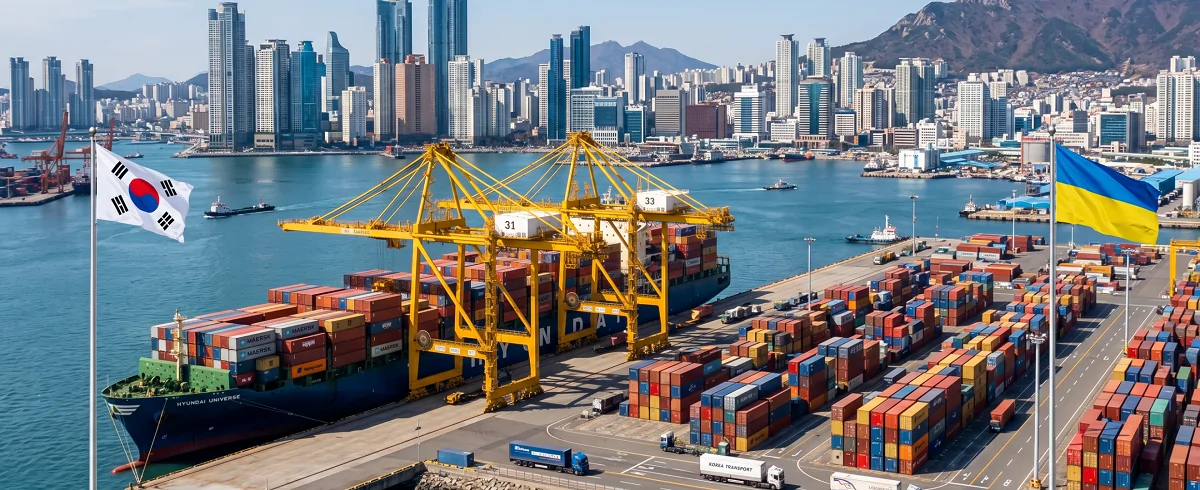
For years, the domestic market relied on purchases from the PRC, but the era of Chinese factory monopoly is gradually coming to an end. Entrepreneurs are turning to other Asian countries, weighing product quality and partner reliability.
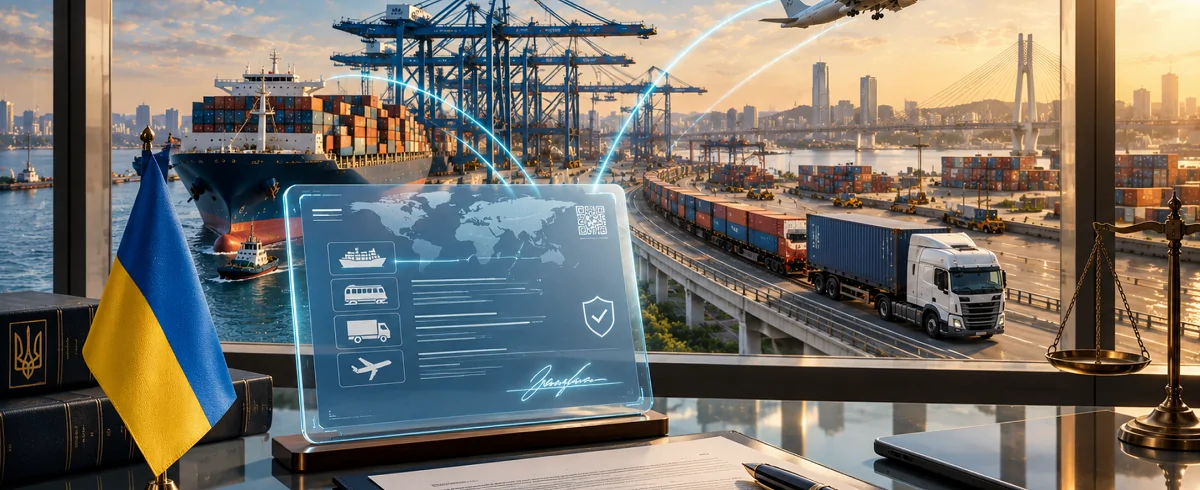
Back in 2021, Ukrainian legislation officially regulated the delivery scheme in which several modes of transport are combined for a single route.
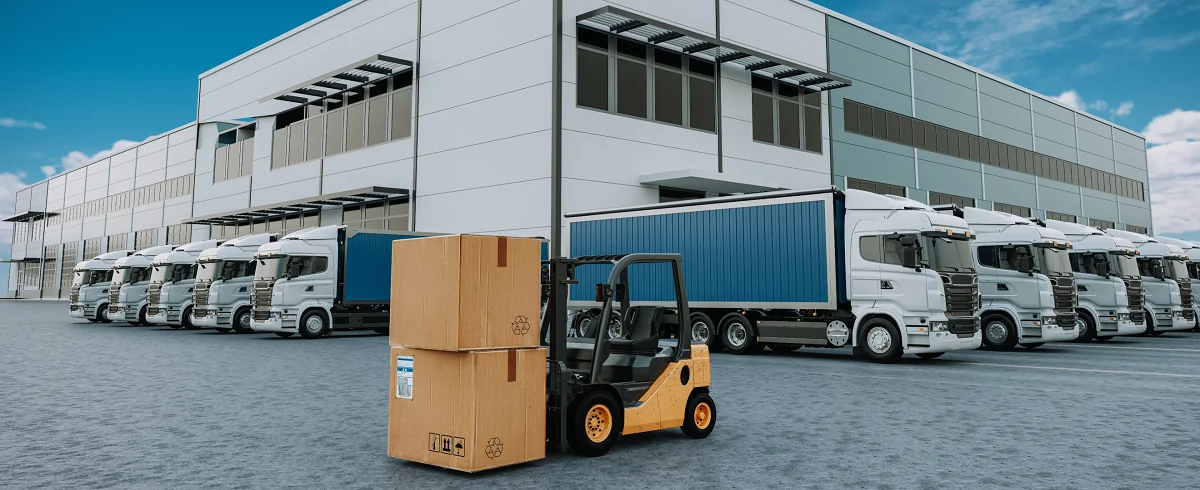
For a business, a logistics company is one reliable partner instead of a dozen separate contractors. It handles communication with carriers and quickly resolves force-majeure situations on the road

Without reliable delivery, a farmer’s harvest won’t reach the market on time. A logistics company for a farmer is not just a service provider — it’s a partner on whom the financial outcome of the season depends.

On the night of July 19, 2026, a massive missile attack severely damaged the Ekol Logistics distribution center located in the AMTEL logistics complex.

Anna
Business development manager

Volodymyr
Business development manager

Artur
Business Development Manager
