

Digital Product Passport (DPP): Why Without Transparent Logistics Your Goods Will No Longer Be Bought in Europe


The European market today is a space where environmental responsibility and data transparency are valued even more highly than the product itself. For exporters, it is no longer enough to produce a high-quality item; it is necessary to “illuminate” every stage of its journey to the shelf, ensuring full supply chain traceability and compliance with European standards.
The key tool of such strict control is the Digital Product Passport, without which market entry to the EU for most niches will soon be closed.
What Is a Digital Product Passport (DPP)
Usually, when businesses are just exploring Western platforms, a logical question arises: what is a Digital Product Passport? It is not another PDF document, but a full-fledged profile that contains all information about a product – from the chemical composition of raw materials to its recycling methods, including verification processes and assurance of data reliability.
The Digital Product Passport (DPP) functions as a unique identifier (QR code or watermark) that allows one to obtain the product’s history within seconds.
According to Ekol experts, this initiative is part of the EU’s global strategy aimed at transitioning to a circular economy and implementing innovations in digital market regulation.
Structurally, a DPP usually includes the following mandatory blocks:
- precise description of components and their origin;
- actual carbon footprint indicator;
- checklist for repair and reuse;
- complete “route sheet” with logistics data.
Such a digital database makes every product fully transparent for regulators and end consumers, eliminating any doubts about its legality and compliance with established EU regulations.
How DPP Changes Logistics Standards in Europe
The days when transportation was simply “delivery of boxes” are gone. Today, digital passports in logistics force companies to integrate their IT solutions into a single chain. Every customs checkpoint or warehouse transfer is not just a stop, but a record in a registry.
As Ekol specialists note: “We are witnessing a real transformation: logistics has become a source of critically important data. If you cannot confirm delivery transparency, your goods will be stuck at customs because, for the DPP system, they are anonymous objects without history.” This means that international freight transportation is now impossible without deep digitalization of accompanying processes.
The Importance of Logistics Transparency for the European Market
For Europeans, transparency is the foundation of safety. A buyer in Berlin or Prague wants to be confident that their sweater was produced under ethical conditions and delivered through legal routes. Logistics transparency provides this proof by automatically collecting data about every stage of transportation.
Below is a list of factors that directly influence the loyalty of European partners and regulators:
| Control factor | What it provides to the business |
| Eco-monitoring | Data on actual CO₂ emissions during transport, important for reporting |
| Customs certification | Faster border crossing due to pre-verified data |
| Integrity control | Guarantee that goods were not repackaged in questionable hubs |
This approach allows exporters not just to “enter” the market, but to firmly establish themselves in it.

Impact of DPP on Consumer and Business Trust
Today, the Digital Product Passport in e-commerce is more effective marketing tool than any advertisement. Brands that openly demonstrate their supply chain become favorites. When customers see verified data, they are willing to pay more because they are not just buying a product, but confidence in its safety.
This also applies to the B2B segment. Large European retailers are already including clauses on digital transparency and mandatory certification in contracts. Therefore, early adoption of DPP is not a trend – it is a matter of business survival in the international arena.
Problems Without Transparent Logistics in European Trade
Rejection of digital standards leads to a number of problems that can instantly eliminate export profits. Companies that ignore DPP become targets for inspections.
Here are the main risks every exporter should consider:
- Reputational losses. A brand that hides logistics quickly falls into the “suspicious” category.
- Financial losses. Additional inspections, warehouse delays, and fines from European regulators.
- Complete export halt. Goods without a DPP will simply not be accepted by major retail chains.
According to Ekol experts, without implementing a product passport, Ukrainian businesses risk being left outside the European economy within 1.5–2 years.
How DPP Helps Reduce Costs and Improve Efficiency
Although implementing technologies requires investment, understanding how the Digital Product Passport works ultimately helps save money. When every step of a product is digitized, you gain a real picture of costs and can eliminate unnecessary expenses.
Thanks to DPP analytics, companies gain the following advantages:
- Inventory optimization. Fewer warehouse downtimes due to accurate delivery timelines.
- Audit automation. Data is collected automatically, eliminating the need for paper reporting staff.
- Defect minimization. Real-time transport condition monitoring reduces damaged goods.
By implementing modern digital logistics solutions, you turn processes into a precise mechanism that works for your profit.
How Integrating the Digital Product Passport Improves Competitiveness
In a situation where dozens of similar products are placed on the shelves, the DPP becomes your “joker.” It is a quality mark that cannot be forged. While your competitors try to explain the origin of raw materials verbally, you simply provide a link to the Digital Product Passport. This creates a significant advantage in tenders and when concluding long-term international contracts.
Examples of DPP Application in Europe
European electronics brands are implementing DPP to control battery disposal. A buyer can see how many charging cycles a battery has gone through and where to return it after use. In the textile industry, digital passports help fight counterfeiting by confirming the originality of each designer item. This is no longer the future – it is a reality being formed today.
Conclusion
Digitalization is no longer an option, but a strict requirement for operating in the EU. The Digital Product Passport is becoming the foundation of a new era of trade, where data is as critical as the cargo itself. By implementing these standards, you are effectively purchasing an entry ticket to the premium market segment for years ahead.
Ekol is ready to help you go through this journey by providing expert support and modern tools for your growth.
FAQ
Is the Digital Product Passport mandatory for all goods now?
At present, the requirements are being implemented gradually. The first categories defined for 2026 are iron and steel; by 2027 – textiles/clothing, tires, and aluminum. The EU roadmap foresees a gradual inclusion of all consumer sectors by 2030.
How does the Digital Product Passport change logistics in Europe?
Logistics becomes an intelligent service link. It is no longer enough to simply reach the destination – you must ensure a “digital footprint” of the cargo. This requires carriers to have powerful IT systems for transmitting data into the DPP.
Why is logistics transparency becoming important for European consumers?
Western consumers have become highly conscious. They need to know that product delivery does not harm the environment and that businesses pay taxes at every stage. Transparency is the only way to prove ethical compliance.
What are the main requirements for a Digital Product Passport in the EU?
The key requirement is interoperability (the ability of systems to communicate with each other), data security against breaches, and easy access for the customer. All information must be up to date and reflect the product’s condition in real time.
read more
Similar articles
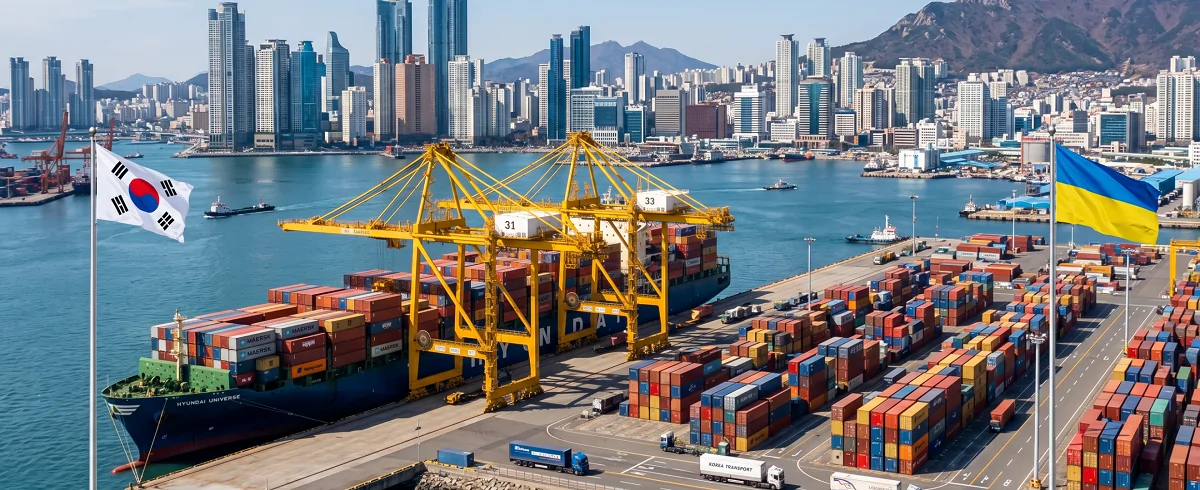
For years, the domestic market relied on purchases from the PRC, but the era of Chinese factory monopoly is gradually coming to an end. Entrepreneurs are turning to other Asian countries, weighing product quality and partner reliability.
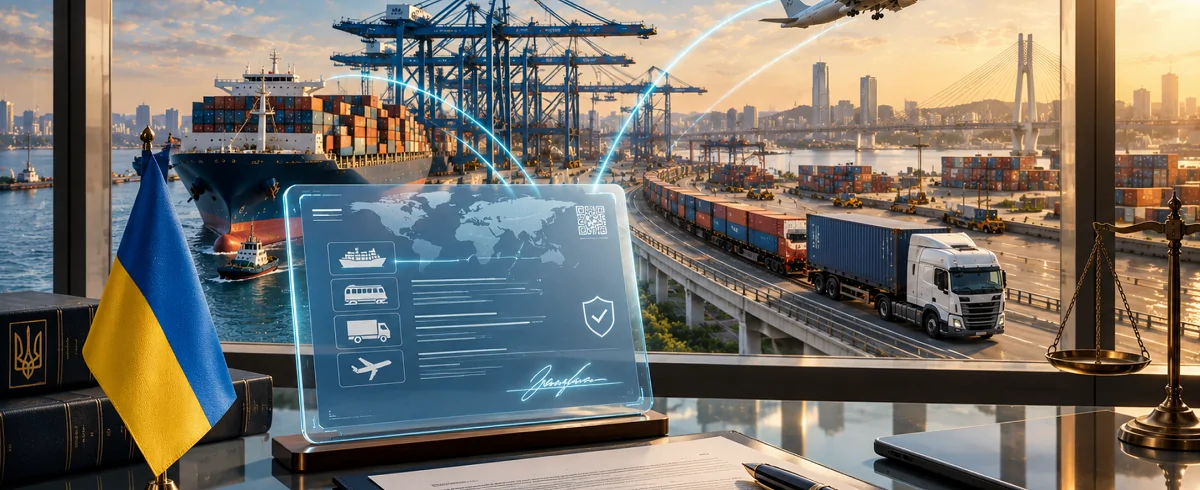
Back in 2021, Ukrainian legislation officially regulated the delivery scheme in which several modes of transport are combined for a single route.
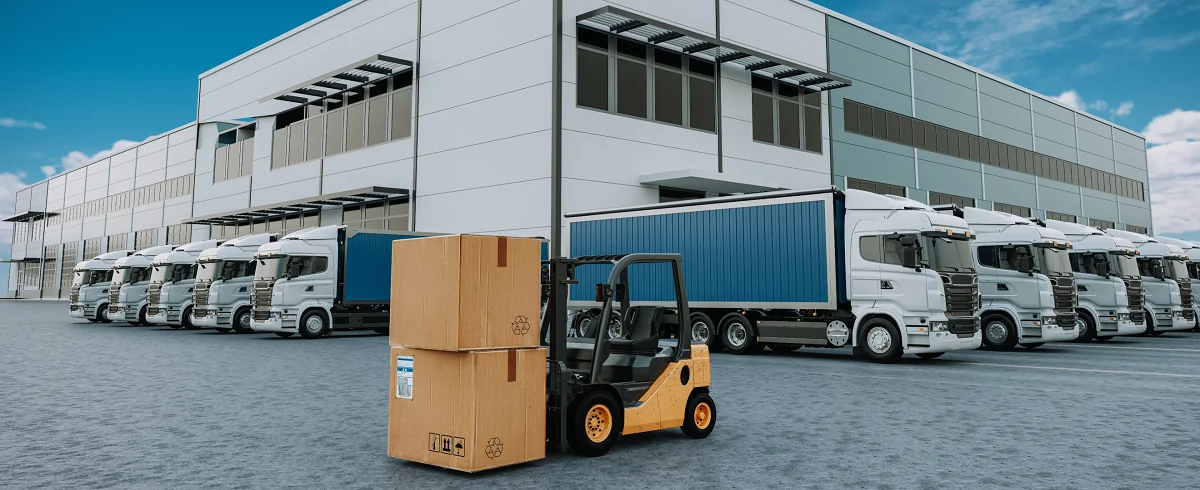
For a business, a logistics company is one reliable partner instead of a dozen separate contractors. It handles communication with carriers and quickly resolves force-majeure situations on the road

Without reliable delivery, a farmer’s harvest won’t reach the market on time. A logistics company for a farmer is not just a service provider — it’s a partner on whom the financial outcome of the season depends.

On the night of July 19, 2026, a massive missile attack severely damaged the Ekol Logistics distribution center located in the AMTEL logistics complex.
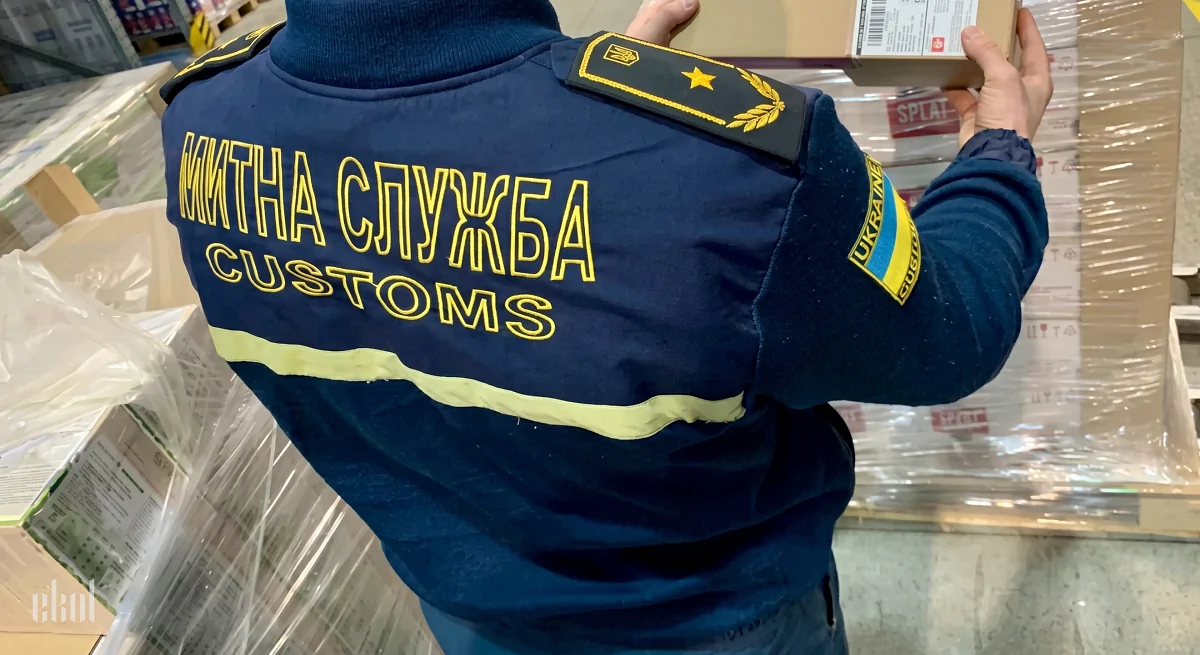
The changes for Ukrainian exporters in 2026 concern not only export clearance procedures but also the organization of shipments to EU countries.

Anna
Business development manager

Volodymyr
Business development manager

Artur
Business Development Manager
