

What Is an MSDS/SDS Safety Data Sheet

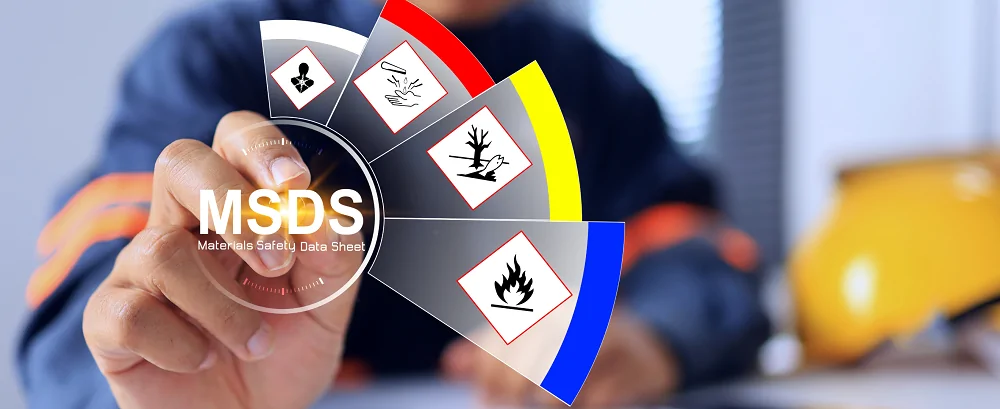
In today’s world, where chemistry underpins many manufacturing processes and substances of varying toxicity are transported across multiple countries, safety is paramount. Insufficient information about a shipment’s specifics can lead to serious consequences—from health problems among workers handling the cargo to large-scale environmental accidents.
To minimize these risks, international regulations for transporting hazardous goods have been developed, along with a special chemical safety document. Understanding this document is essential for everyone, even those who don’t currently work with chemicals. Below, we explain what a Safety Data Sheet is and how to use it.
What Is a Safety Data Sheet (MSDS/SDS)
Simply put, a Safety Data Sheet is an official document containing complete information about a chemical substance or mixture, its properties, and potential hazards. It also outlines instructions for safe use, storage, and disposal.
Internationally, the document may be called an MSDS (Material Safety Data Sheet) or SDS (Safety Data Sheet). Both terms refer to the same type of document, though there are some differences we’ll discuss later.
Why a Safety Data Sheet Is Needed
The primary purpose of an SDS is to provide detailed information on the contents of a container and the rules for safe handling. From this document, manufacturing staff, laboratory workers, and transporters learn:
- how to handle the reagent,
- what personal protective equipment to use,
- whether direct contact is dangerous,
- whether ventilation is required in storage or transport areas,
- what type of transport and conditions will prevent potential risks.
Regulatory and customs authorities also rely on the SDS to ensure that hazardous cargo meets international standards and regulations.
Who Must Prepare an SDS
According to international rules, the manufacturer or supplier of a chemical substance or mixture is responsible for preparing the SDS. The document must be updated whenever:
- the composition of the mixture changes,
- the classification of the substance is revised,
- new data on toxicity or environmental impact appear,
- relevant legislation is amended.
Incidentally, the accuracy of the SDS form largely determines whether such cargo will pass customs control.
Differences Between MSDS and SDS
The most common question for those new to these documents is how MSDS differs from SDS. In essence, they serve the same purpose but use different classifications and structures.
- MSDS is the older format. It lacked a unified international standard, so information was presented according to national or regional requirements, creating confusion and complicating global trade.
- SDS is the modern, standardized format developed to meet international requirements.
Comparison table between MSDS and SDS
| Characteristic | MSDS (outdated) | SDS (current international format) |
| General format | Non-standard, varies by manufacturer | Unified, 16 standard sections |
| Regulation | Mostly used in the United States | Global Harmonized System (GHS) |
| Information | Could be incomplete, inconsistent | Clear order and full set of data |
| Primary purpose | Provide hazard information | Standardize information for global trade and safety |
| Relevance | Obsolete, being phased out | Modern and mandatory in most countries |
| Accessibility | Sometimes unclear due to varying formats | Readable and recognized worldwide |
Requirements for Formatting and Standardization
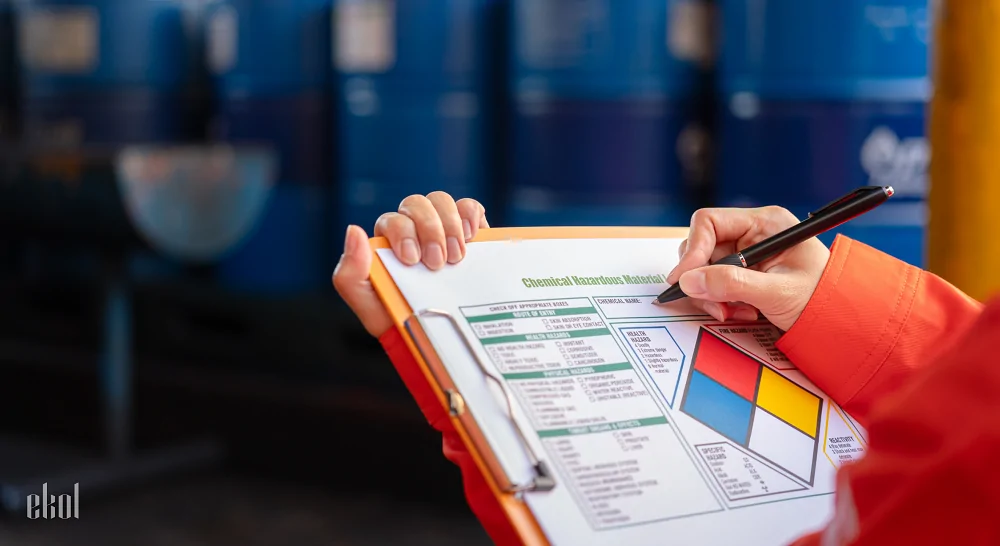
An SDS prepared under international standards includes a label with hazard pictograms. It provides manufacturer details, describes the substance’s properties and toxicity, lists storage requirements, and gives instructions for emergency situations. The standardized SDS consists of 16 clearly defined sections, each focusing on a specific aspect of the chemical.
Role in International Trade
The importance of an SDS in global trade is hard to overstate. Based on practical experience, adopting a unified SDS format has greatly simplified international logistics. A document prepared in one country is valid abroad, allowing all stakeholders to understand it and reducing the risk of misunderstandings or delays.
How to Read a Safety Data Sheet
It’s not enough to simply have an SDS—you must also know how to read it. Thanks to its clear structure, this is not difficult. While every section matters, pay special attention to:
- hazard classification,
- storage conditions,
- first-aid recommendations in case of contact,
- transport requirements and disposal guidelines.
A Safety Data Sheet is not just a reference card; it’s a comprehensive risk-management tool. Companies that consistently maintain and use SDS documents earn greater trust from partners and employees.
FAQ
What is a Safety Data Sheet (MSDS/SDS)?
A document detailing a chemical substance’s properties, risks, and safe handling instructions.
How does MSDS differ from SDS?
MSDS is an outdated format; SDS is the modern, globally standardized version.
Why is an SDS required?
To inform about potential hazards, reduce risks, and ensure legal transportation of chemicals.
Who must prepare an SDS?
The manufacturer or importer of a chemical classified as hazardous.
read more
Similar articles

Logistics offers two tools for shipping from Germany: Less-than-Truckload (LTL) consolidation and Full Truckload (FTL) shipments.

A dry port is one of the solutions to the problem of congestion at seaports and customs-logistics infrastructure. It relocates part of operations inland. But the real impact comes from digital integration.

Most FPV components are sourced from China. This is a long route with temperature fluctuations and extended storage in transit zones.

Last-mile delivery is the final stage of the logistics chain, which shapes both the service cost and customer loyalty.
There are more than 8,000 kilometers between Ukraine and Japan, with no shared border or direct rail connection. Despite this, imports from Japan to Ukraine are growing

Just a few years ago, a dispatcher would spend an hour on a single request. Today, AI agents in logistics accomplish the same task in minutes – without phone calls or errors.

Anna
Business development manager

Volodymyr
Business development manager

Artur
Business Development Manager
