

Transportation of Complex Industrial Equipment: Customs Requirements and Document Flow

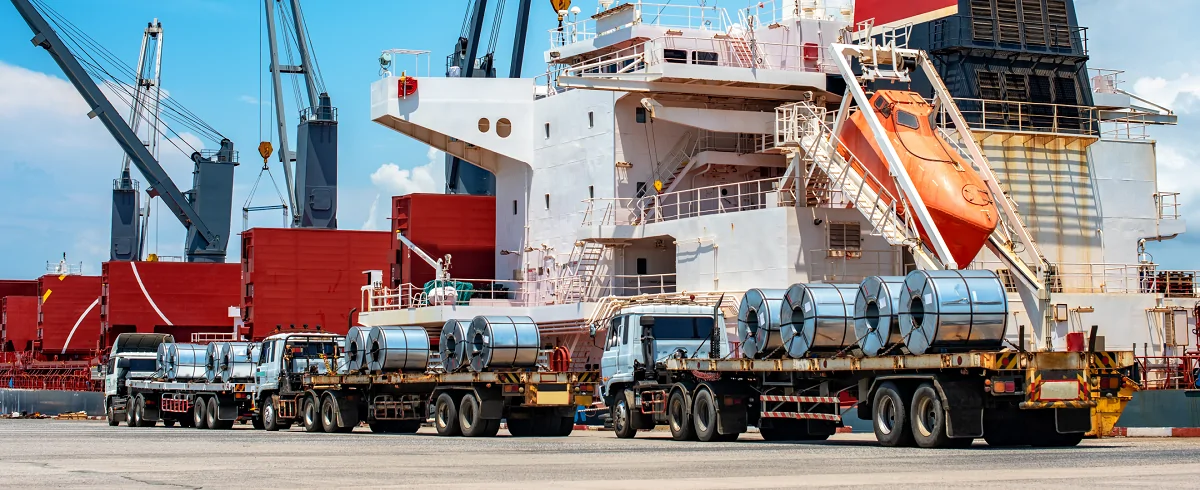
International transportation of industrial equipment is always a high-risk logistics project. Its success depends not only on the reliability of the carrier and the correctness of route selection, but also on impeccable documentation preparation. In such a matter, it is important to take into account strict customs rules for transportation.
Classification of Equipment – What Is Considered Complex Cargo
This is a category that requires a special approach to logistics and processing. It corresponds to one or several of the following characteristics:
- Oversized dimensions and excessive weight (OOG/Heavy-lift): exceeds the standard dimensions and weight permitted for transit by road, rail, sea, or air.
- High value: technological lines, CNC machines, scientific/medical equipment, where the risk of financial losses is unacceptably high.
- Specific transportation conditions: sensitivity to vibration, requirements for temperature regulation, or the need for disassembly/assembly on site.
- Complexity of customs declaration: strict criteria for description, classification according to the UKTZED (Ukrainian Classification of Goods for Foreign Economic Activity), and confirmation of purpose.
For example, international transportation of industrial equipment for the oil and gas sector – drilling rigs or heavy-duty presses – always belongs to this category.
According to Ekol experts, to minimize risks, the classification of equipment should be completed already at the stage of signing the contract.
Customs Requirements: Basic Rules and Regulations
International transportation of industrial equipment requires thorough preparation, and it should begin with studying customs regulations. The main provisions:
- UKTZED code: precise declaration of the goods is critical for calculating duty and determining the need for licensing or other non-tariff measures.
- Customs value: must be supported by complete documentation (contracts, invoices). This is the basis for calculating payments.
- Technical certification: import of industrial equipment requires assessment of its compliance with national technical regulations.
Customs requirements for transporting equipment:
| Customs regime | Appointment | Main payments | Required permits (examples) |
| Imports | Permanent use in Ukraine | Duty, VAT, excise (if applicable) | Certificates of conformity, sanitary-epidemiological conclusions |
| Export | Removal from Ukraine | Export duty, VAT 0% (under conditions) | Licensing (for certain technologies) |
| Temporary import/export | Participation in exhibitions, repair, and testing | Conditional exemption from payments | Guarantee obligations, permit for temporary import |
| Processing in the Customs Territory | Production followed by re-export | Conditional exemption, guarantees | Special permit for processing operations |
A key element is cooperation with a customs broker, who helps avoid violations and accelerates registration.
Document Package for Transportation Processing
For the transportation of complex industrial equipment, in addition to the standard set (invoice, packing list, CMR/bill of lading), specific documents are added:
- Foreign economic contract: contains delivery terms (Incoterms), total value, detailed description of the goods.
- Technical documentation: equipment passports, diagrams, drawings, marking, and assembly instructions.
- Certificate of origin: identifies the country of manufacture, enables the application of preferential tariffs (for import).
- Value confirmation: bank statements, payment orders, commission agreements.
- Cargo insurance: preferably with coverage of all risks.
Ekol specialists note that the quality of accompanying materials directly affects the efficiency of the process.

Features of the Customs Declaration of Equipment
In declaration, accuracy and full compliance with technical parameters play a decisive role. When completing the forms, the following aspects should be taken into account:
- detailed indication of technical characteristics, materials, and origin;
- correct customs processing of gas compressors or other special equipment;
- use of precise parameters to reduce the risk of additional inspections;
- consistency of information across all documents, including marking and packing documentation.
Attention helps minimize potential risks and ensures continuity of the registration process.
Export and Import Permits: What Needs to Be Prepared
Obtaining special permits and licensing is an obligatory element when it comes to international transportation of industrial equipment.
| Type of Permit / Document | Direction | Purpose |
| Declaration of conformity | Import | Certifies compliance with the technical norms of Ukraine |
| Sanitary-epidemiological conclusion | Import | Required for equipment that comes into contact with food products, water, or humans |
| Licenses (special) | Imports | Required for radio-electronic equipment and high-frequency devices |
| State Export Control Permit | Export | Mandatory for dual-use goods (e.g., high-precision machines) subject to regulation |
| Veterinary/phytosanitary certificates | Export | Required for pallets or wooden packaging materials to prevent pest spread |
These documents confirm compliance with national regulations and ensure state control.
Requirements for Confirming Origin and Technical Characteristics
Accurately confirming origin is critically important, as it affects the application of preferential tariffs.
Types of certificates:
- General form: issued by the Chamber of Commerce and Industry of the exporting country.
- Special (EUR.1, CT-1, A): grant the right to reduced or even complete cancellation of customs duties in accordance with free trade agreements.
Certification of technical characteristics is carried out by providing detailed passports, test reports, and conclusions from accredited laboratories. This is especially important for the transportation of gas compressors, where priority indicators are power and safety.
Logistics Risks – The Role of Proper Document Flow
Any mistake can negatively affect international transportation of industrial equipment. This leads to:
- delays at the border;
- penalties;
- confiscation of goods.
Only the correctness of the documents guarantees the preservation of industrial assets.
Customs Control and Inspection Procedures
Customs carries out control of both the documentation and the equipment itself. The main steps:
| Step | Action |
| Document check | Analysis of declarations and certificates |
| Cargo inspection | Physical examination of the equipment |
| Value assessment | Calculation of tariffs |
| Completion of processing | Issuance of a permit for transit or import |
Meticulous execution of all procedures ensures successful transportation.
How to Prepare and Avoid Delays
International transportation of industrial equipment requires accuracy at every stage. It is recommended to:
- collect documentation in advance and undergo licensing or certification;
- involve experienced customs brokers;
- check compliance of marking with international regulations;
- arrange full insurance;
- clearly distribute responsibilities during transit.
Strategic logistics planning is the key to avoiding downtime. Only a comprehensive approach, which Ekol offers, contributes to efficient movement.
FAQ
Can equipment be transported without certificates?
No, certificates confirm technical characteristics and origin. Their absence leads to delays at customs.
Who is responsible for customs clearance?
Responsibility is shared: the customer provides correct information, the carrier properly completes the declaration.
Is it necessary to insure every type of equipment?
Yes, insurance covers the risks of damage during transportation and guarantees compensation in case of unforeseen situations.
read more
Similar articles

Logistics in the European Union covers dozens of countries with different transport networks. Its functioning is based on strict standards of transportation quality and a well-developed infrastructure.
Logistics is often accompanied by delays at the border, unstable customs operations, and changes in export and import regulations

The growth of e-commerce is forcing companies to seek optimal solutions for rapid order fulfillment and reduced operating costs.

Online cargo tracking is one of the most critical aspects of transportation automation. Thanks to modern tracking systems, it is easy to find out in real-time exactly where a shipment is located, its estimated delivery time, and whether there are any delays.

The European market has always attracted Ukrainian business, but the rules of the game are becoming increasingly stricter.

The European market today is a space where environmental responsibility and data transparency are valued even more highly than the product itself

Anna
Business development manager

Volodymyr
Business development manager

Artur
Business Development Manager
