

Delivery of FPV Drone Components: Packaging, Transportation and Cargo Safety Rules

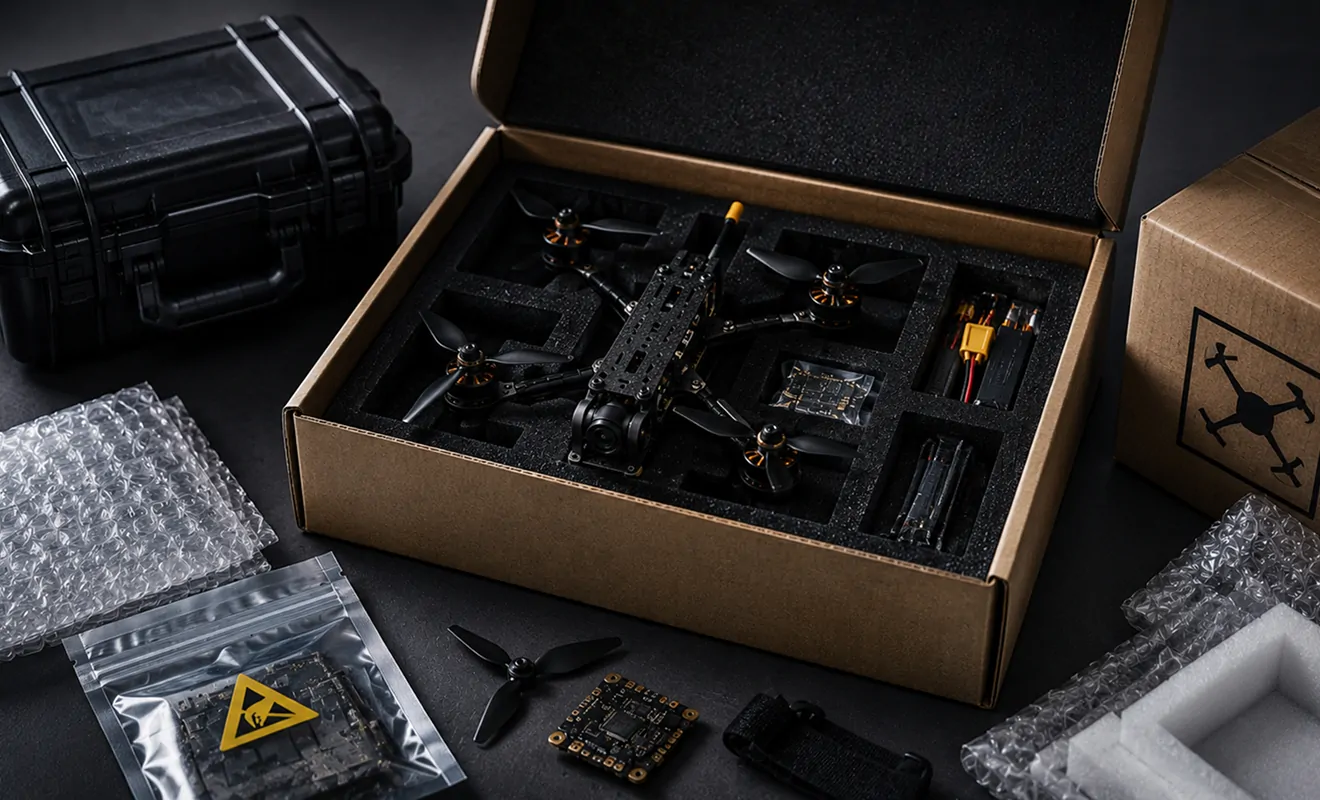
Most FPV components are sourced from China. This is a long route with temperature fluctuations and extended storage in transit zones. Under such conditions, logistics quality directly affects the safety of the equipment.
This article covers how safe delivery of FPV components is carried out and what packaging and labeling requirements apply.
Specifics of Delivering FPV Drone Components
This type of cargo combines fragile electronics, chemically active batteries, and small mechanical parts. Key characteristics of such shipments:
High sensitivity to temperature changes, vibration and impact. Electronic components can fail even from minor mechanical stress, overheating or excessive cold.
Specific battery requirements. LiPo and Li-Ion batteries are classified as hazardous goods and require a separate approach when shipping.
Customs restrictions. Delivering FPV drone components from China to Ukraine requires correct declaration of goods.
These combined factors make it essential to work with an experienced logistics company for such shipments.
Which Components Require Extra Care During Transportation
Not all components are equally vulnerable, but certain categories demand extra attention:
| Category | Risk | Required Protection |
| Flight controllers (FC) and ESCs | Damage from static electricity or vibration | Antistatic bags, cushioned packaging |
| LiPo and Li-Ion batteries | Fire, short circuit, deformation | Specialized fireproof bags, separate box |
| Video transmitters (VTX) and receivers | Fragility of antennas and connectors | Rigid container, polyethylene foam |
| Motors and regulators | Winding deformation, contamination | Individual wrapping, hermetic sealing |
| FPV cameras | Sensor and lens damage | Protective covers, soft packaging |
| Frames and structural elements | Carbon fiber cracks | Rigid outer shell |
Flight controllers and batteries are considered the most sensitive. Delivery of such FPV components requires strict compliance with applicable standards.
General Packaging Rules for Components
When organizing delivery, the following general principles apply:
- Each part in separate packaging. Mixing different components in one box without dividers is not acceptable.
- Cushioning on all sides. There should be at least 3–5 cm of cushioning material between the part and the box walls.
- Secure fixation without gaps. Parts must not move inside the package – any free space should be filled with filler material.
- Hermetic sealing where needed. Moisture-sensitive components require sealed bags with silica gel.
- Inner boxes must be placed inside rigid outer packaging made of corrugated cardboard or wood.
Packaging Electronics, PCBs and Modules
Electronic components (circuit boards, microcontrollers, video modules) require protection from mechanical damage and electrostatic discharge (ESD).
Step-by-step scheme:
- Place the component in an antistatic bag.
- Wrap it in several layers of bubble wrap.
- Place it in a box on a polyethylene foam base.
- If packing multiple boards in one package, separate them with rigid dividers.
- Seal the package and label it: “Fragile”, “Electronics”, “Do Not Expose to Static”.
According to Ekol Logistics specialists, antistatic protection and quality cushioning of components significantly reduce the risk of damage during international transportation.
Packaging Batteries for FPV Drones
LiPo batteries are classified as hazardous cargo (hazard class UN 3480 / UN 3481). Such delivery of FPV components falls under international IATA (air) and ADR (road) regulations.
Key requirements:
- For air shipments, batteries are typically required to be charged to no more than 30%.
- Each battery must be individually placed in a fireproof bag (LiPo Bag / LiPo Safe).
- Terminals and contacts must be insulated with tape or protective caps.
- Batteries must not be packed together with flammable materials.
- For large batches or industrial shipments, ground or sea routes are recommended.
Protection of Fragile and Small Parts
Screws, connectors, antennas and bearings are often underestimated when it comes to packaging. Yet these are the items most frequently lost or damaged during transportation.
Practical advice:
- Sort small parts by type and place them in separate zip-lock bags.
- Fragile antennas should be wrapped in rigid tubes or cardboard protectors.
- Glass and plastic camera lenses must be protected with film and foam inserts.
- All small packages should be secured inside the main box with filler or foam inserts.
Cargo Labeling Requirements
The outer packaging must clearly indicate:
- Full details of sender and recipient (name, address, phone number).
- Contents and quantity of units.
- Gross weight and dimensions.
- Labels: “Fragile”, “This Side Up”, “Do Not Drop”, “Keep Dry” (where applicable).
- For batteries – hazardous cargo labeling with UN code.
- Customs declaration or invoice attached to the outer surface in a clear envelope.
Ekol experts note that correct labeling significantly speeds up dispatch and reduces the risk of customs delays.
Safe Transportation Rules
Delivering FPV drone parts from China requires careful attention at every stage. Key factors to consider:
Mode of transport. For high-value electronics in small volumes, air delivery is suitable. For large batches of components, sea or rail transport combined with road transport is the optimal choice. Multimodal transport allows combining speed and cost-efficiency along the route.
Number of transshipments. Each additional handling increases the risk of mechanical damage. Optimal logistics minimizes intermediate storage points.
Tracking. Choose a carrier that offers real-time tracking at all stages of the journey.
International transportation requires a comprehensive approach, especially when dealing with non-standard and regulated cargo.
Cargo Storage Conditions During Delivery
This is not just a packaging question – it also involves maintaining proper conditions at all intermediate points along the route.
Storage conditions for FPV components:
- Temperature from +5°C to +35°C for most electronic components.
- Relative humidity no more than 60–70% without condensation.
- Batteries stored separately from other electronics in ventilated premises.
- Cargo must not be placed directly on the floor – only on pallets or shelving.
- Contact with chemically active substances and lubricants must be avoided.
A reliable carrier ensures storage conditions are monitored at transit warehouses and records any violations in the accompanying documentation.
Possible Risks During Transportation
Even when all rules are followed, risks cannot be fully eliminated. These include:
- Mechanical damage to components caused by impacts, drops or improper stacking.
- Battery fires resulting from incorrect LiPo battery packaging.
- Customs delays due to incorrect or incomplete declaration of contents.
- Loss or theft – particularly relevant for high-value shipments.
- Moisture damage in case of storage condition violations at a warehouse or during transit.
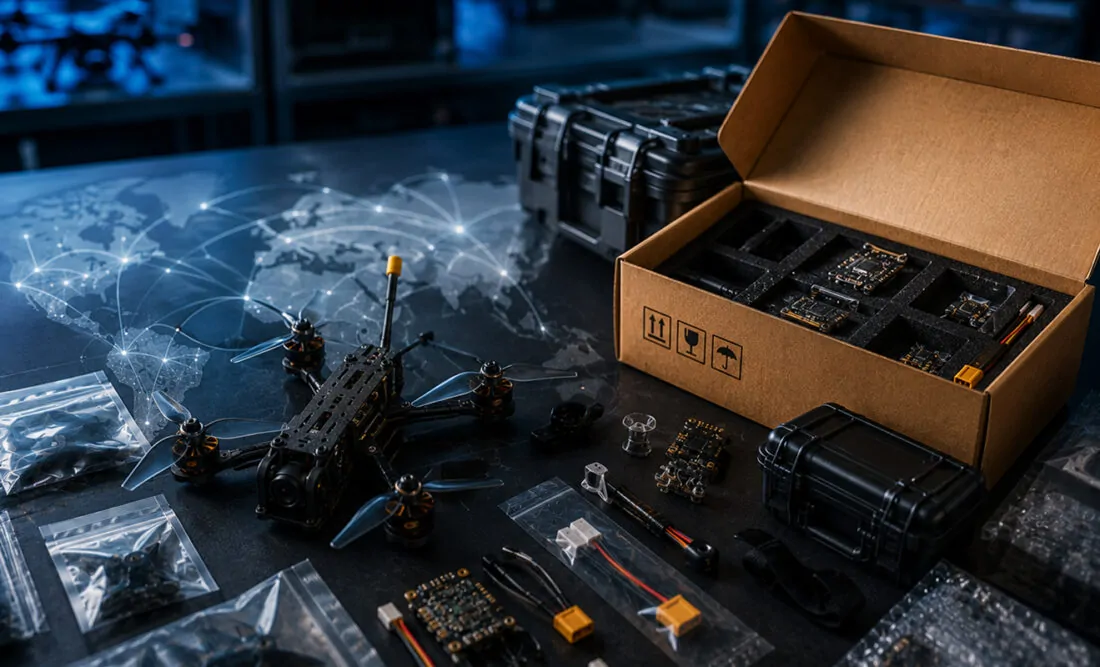
How to Inspect Components Upon Receipt
Do not rush to sign acceptance documents. First, take the following steps:
- Assess the external condition of the boxes. Any dents, tears or signs of moisture are grounds to file a complaint.
- Unpack in the presence of the courier or carrier representative if visible damage is observed.
- Compare the quantity of components with the packing list and invoice.
- Check the integrity of antistatic and protective bags for circuit boards.
- Inspect the batteries. Swelling, deformation or leakage are grounds to refuse the shipment.
- Document all issues with photos and video before completing the unpacking. Submit a complaint within the timeframe specified in the contract.
Tips for Choosing a Carrier
Choosing the right logistics partner is the primary factor in ensuring successful FPV component delivery. The carrier must have experience handling batteries and electronics and must be familiar with IATA and ADR requirements.
Additional factors to consider:
Route network. A well-developed infrastructure for shipments from China to Ukraine with transparent timelines is essential.
Real-time tracking. Monitoring at every stage allows for quick response to delays.
Insurance option. A reliable partner offers this service directly when arranging the shipment.
Customs support. Assistance with declaration and documentation significantly reduces the risk of border delays.
Reputation and reviews. Research the experience of other clients who have shipped similar cargo.
Ekol Logistics offers comprehensive solutions for delivering drone components to Ukraine – from route planning and packaging to customs clearance and insurance.
Conclusions
Delivering FPV drone components is a complex logistics process where every stage matters. Proper packaging of electronics and batteries, correct labeling, adherence to storage conditions and smart route selection together form reliable protection for the cargo throughout its journey.
If you are planning to deliver FPV components from China or other origins, trust an experienced partner. This will not only keep the equipment intact but also save you time and money.
FAQ
Can FPV drone batteries be shipped together with other components?
Yes, but only if safety requirements are met. Batteries must be separately packaged, terminals insulated, and the cargo labeled in accordance with lithium battery transportation rules. Additional restrictions may apply for air shipments.
How do you choose the optimal route for delivering FPV components from China to Ukraine?
Air freight suits small and urgent shipments; sea and rail transport is better for large volumes. Multimodal transportation is the most commonly used approach.
Is insurance necessary when delivering FPV components?
For high-value shipments, insurance is strongly recommended. It helps compensate for risks of damage, loss or delay during international transportation.
read more
Similar articles
Last-mile delivery is the final stage of the logistics chain, which shapes both the service cost and customer loyalty.
There are more than 8,000 kilometers between Ukraine and Japan, with no shared border or direct rail connection. Despite this, imports from Japan to Ukraine are growing

Just a few years ago, a dispatcher would spend an hour on a single request. Today, AI agents in logistics accomplish the same task in minutes – without phone calls or errors.

Imagine: you need to deliver cargo from Kharkiv to Warsaw. By truck – it’s slow and expensive due to border queues. By rail alone – there’s no direct connection to the consignee’s warehouse
Logistics in the European Union covers dozens of countries with different transport networks. Its functioning is based on strict standards of transportation quality and a well-developed infrastructure.
Logistics is often accompanied by delays at the border, unstable customs operations, and changes in export and import regulations

Anna
Business development manager

Volodymyr
Business development manager

Artur
Business Development Manager
