

Practice shows that cost reduction begins with understanding the inventory structure and real demand. Assortment segmentation, regular movement analysis, automated accounting, and control of replenishment points allow for reducing surpluses and storage costs.
Inventory Management with Ekol: Precision That Becomes Your Capital
With Ekol’s optimization strategy, your money doesn’t “sit on shelves” in the form of excess stock — it works efficiently to grow your business. We offer not a template solution, but a customized program that combines analytics, forecasting, and a deep understanding of your business model. Modern AI-powered tools allow us to predict demand, avoid unnecessary expenses, and free up working capital without risking supply continuity.
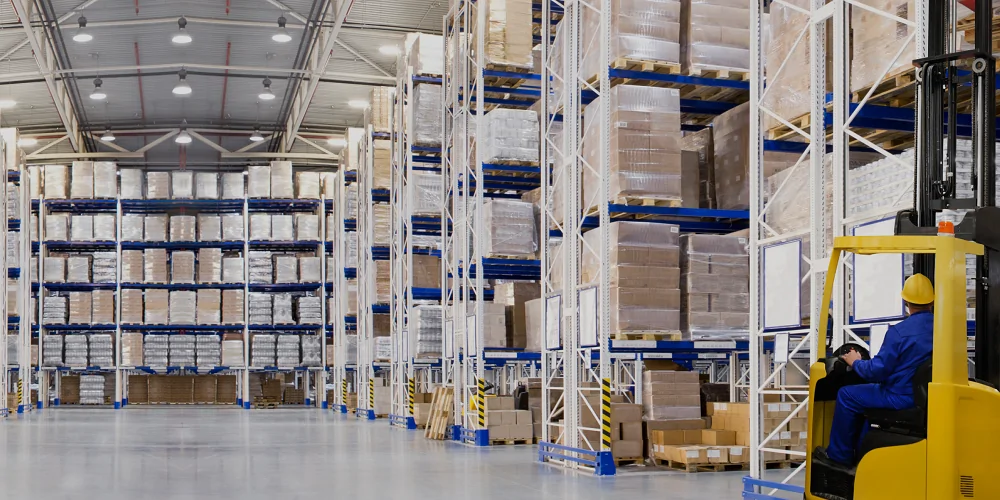
About the service
We create an inventory management system that works proactively. Using smart analytics, we help you avoid situations where products are either out of stock or accumulating unnecessarily in the warehouse. This approach ensures process stability and supports confident planning of procurement, production, and logistics.
What We Offer
 ?>
?>
Real-Time Inventory Monitoring
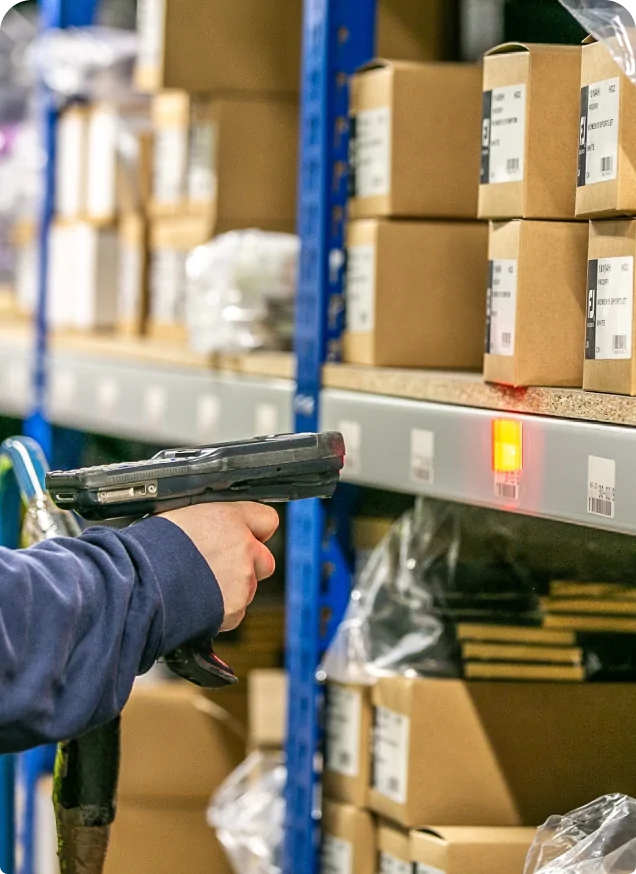
We ensure visibility across all warehouse locations. You can see actual stock levels in real time, while we help you quickly respond to changes in demand, avoid shortages or surpluses, and maintain supply stability without extra effort.
 ?>
?>
Automated Replenishment
We implement systems that automatically generate replenishment orders based on stock analytics and forecasted demand. Your business becomes protected from human-factor errors, and supply schedules remain optimized.
 ?>
?>
Warehouse Process Optimization
Using ABC and XYZ analysis methods, we enhance warehouse operations. We optimize item placement to use warehouse capacity efficiently, reduce picking times, and increase overall workforce productivity.
 ?>
?>
Analytics-Based Demand Forecasting
We use modern AI-powered tools to create highly accurate demand forecasts based on sales data, trends, and seasonality. This enables efficient planning of procurement and production.
 ?>
?>
FIFO/FEFO Inventory Management
We implement FIFO and FEFO inventory rotation systems, essential for products with limited shelf life. Proper rotation minimizes losses from expiry and ensures consistently high service quality.
 ?>
?>
ERP Integration for Data Accuracy
We configure seamless two-way synchronization between your ERP platform and the warehouse WMS system. This eliminates discrepancies between physical and system stock levels and ensures 100% data accuracy.
 ?>
?>
Multi-Warehouse Inventory Coordination
We manage inventory across multiple locations, ensuring optimal distribution, fast transfers, and accurate inter-warehouse planning. This reduces delivery costs, improves logistics routes, and increases product availability across regions.
 ?>
?>
Automated Inventory Counting
Scanners, digital tools, and automated workflows make inventory counting fast and accurate. Fewer manual tasks mean fewer errors and greater confidence in data accuracy.
Inventory Management and Optimization
In logistics practice, inventory management is rarely just about simple bookkeeping of stock balances. It is about a constant search for balance between product availability, financial costs, and supply chain stability. For companies with an extensive network of suppliers and customers, this task quickly becomes strategic.
Basic Principles of Inventory Management
Effective inventory management for business always begins with understanding the importance of monitoring. In practice, this means:
- Accurate demand forecasting, which reduces the risk of shortages and overloaded warehouses;
- Determining optimal stock levels, allowing for supply continuity;
- Transparency and process control, enabling real-time tracking of goods movement;
- Standardization and IT integration, ensuring coordinated work of all supply chain participants and reducing dependence on the human factor.
Inventory Optimization Methods
Inventory management optimization is rarely achieved with a single tool. Usually, it is a set of solutions tailored to the specifics of the product range, sales pace, and customer requirements. In Ekol’s practice, various approaches are used:
- ABC and XYZ Analysis;
- Just-in-Time (JIT);
- Warehouse Automation.
Combined, these approaches help reduce operating costs, accelerate inventory turnover, and avoid sharp fluctuations in logistics.
Types of Inventory and Their Impact on Business
In business operations, inventory plays different roles, which is often underestimated. One part of the stock ensures daily operations, while another prepares the company for peak periods. Therefore, there is no one-size-fits-all approach. The following categories of inventory are most commonly distinguished:
| Category | Purpose |
| Operating Stock | Maintains continuity of sales and order fulfillment |
| Safety Stock | Compensates for supply delays and unstable demand |
| Seasonal Stock | Formed with peak loads in mind |
| Strategic Stock | Created as a safety margin for market changes |
Ekol’s approach lies in aligning these categories to maintain supply stability without excessive costs.
Technologies and Tools for Inventory Management
Without digital support, transparent inventory management is practically impossible. That is why Ekol focuses on building an IT environment that accompanies the goods at all stages of movement.
Key elements of this infrastructure include:
- WMS solutions integrated with clients’ ERP systems;
- Barcoding and RFID;
- Analytical and BI tools.
As a result, businesses receive up-to-date information, faster reaction to changes, and greater process manageability during high-load periods.
Determining the Optimal Inventory Level
The optimal inventory level is not a fixed value. It changes along with demand, season, supply conditions, and company goals. Therefore, working with inventory requires constant review and adjustment of strategies. Calculations usually take into account:
- Dynamics and predictability of demand;
- Seasonal fluctuations;
- Lead times and supply stability;
- Partner reliability;
- Strategic business plans.
This approach allows for avoiding both product shortages and stock accumulation.
Conclusion: The Role of Inventory Optimization for Business Success
Competent inventory management directly affects distribution efficiency and supply chain manageability. Ekol helps build a system that remains stable in daily operations while being ready for scaling.

CUSTOMER REVIEWS
What Our Partners Say
More than 500 companies trust Ekol with their freight transportation—here’s what they have to say
“
Ekol has brought order to our inventory: complete transparency of stock levels in real time, with no surpluses or shortages. Working capital has been freed up, and the money is working for us. We recommend them as a reliable logistics partner.
“
Ekol’s AI-based demand forecasting really works: we’ve stopped overstocking our warehouse and are avoiding shortages. The team’s analytical approach is impressive. Our costs have gone down. We’re very satisfied with our partnership.
“
Thanks to Ekol’s inventory optimization, our funds are no longer sitting idle on the shelves. Accurate forecasts, minimal losses, and a higher level of service. We recommend this team to anyone who values efficiency.
500+
satisfied customers
4.9/5
average rating
98%
on-time deliveries
15+
years in the market
FAQ
1
How to optimize inventory management to reduce costs?
2
How does inventory optimization affect overall logistics efficiency?
When inventory management optimization for business is applied in practice, warehouses operate more evenly, transportation is planned more accurately, and orders are processed faster. Ultimately, logistics becomes more flexible, predictable, and economically justified.
3
Why is inventory optimization important for businesses?
Inventory optimization helps reduce operating costs, increase inventory turnover, and improve customer service. The company can respond more quickly to changes in demand, avoid tying up working capital, and minimize the risk of product write-offs.
4
Is it possible to optimize inventory for seasonal products?
Yes. For seasonal products, specific forecasting algorithms are used that take into account sales history, seasonal fluctuations in demand, marketing campaigns, and other factors. This helps prevent shortages during periods of high demand and excess inventory after the season ends.

Volodymyr
Business development manager

Anna
Business development manager
Our industries
Industry solutions
We adapt logistics to the realities of each industry: we automate processes, introduce innovations, and accelerate development.

Food products
Learn more
Temperature control, traceability, compliance with quality standards and reliable delivery to retail and HoReCa

Humanitarian projects
Learn more
Flexible logistics in crisis conditions – fast, transparent, safe, in accordance with international standards

FMCG
Learn more
Stable supply, optimization of logistics costs, inventory rotation and readiness for promotional demand

Fashion Retail
Learn more
Quick launch of collections, adaptation to seasonality, full control of logistics.
